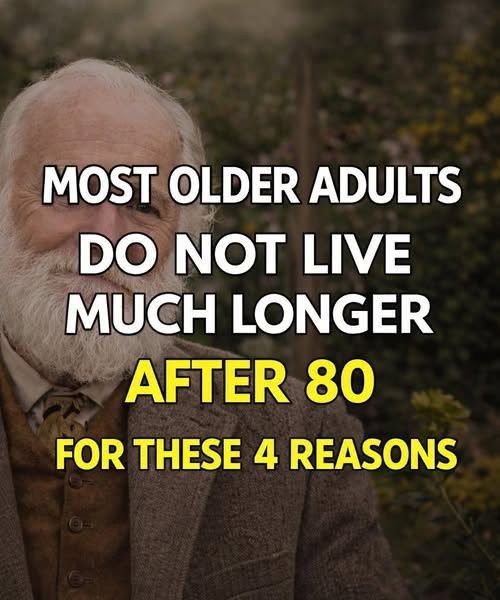
That headline is another oversimplified, fear-driven claim. There’s no fixed rule that “most older adults don’t live past 80.” In many countries, life expectancy has already reached or exceeded that range, and survival varies widely based on genetics, lifestyle, healthcare access, and socioeconomic factors.
What is true is that mortality risk increases with age, and after 80 the body becomes more vulnerable. But the reasons are complex—not just “4 simple causes.”
Here are four major, evidence-based reasons why mortality increases in later life:
1) Chronic diseases accumulate over time
Conditions build up with age, such as:
- Heart disease
- Diabetes
- Stroke risk
- Kidney disease
These are often linked with hypertension, which is a major contributor to cardiovascular complications in older adults.
2) Decline in organ and immune function
With aging:
- The heart becomes less efficient
- The immune system weakens
- Recovery from illness slows
This makes even common infections more serious in older age.
3) Frailty and reduced physical resilience
Older adults are more affected by:
- Falls and fractures
- Loss of muscle mass (sarcopenia)
- Reduced mobility
A simple injury or illness can have a bigger impact than in younger people.
4) Increased vulnerability to complications
Not just disease, but how the body responds:
- Slower healing
- Higher risk of complications after surgery or infection
- Medication sensitivity
Small health issues can escalate more easily.
Important reality check
- Many people live well beyond 80 and even into their 90s or 100s
- “Most don’t live past 80” is not universally true
- Global life expectancy continues to rise in many regions