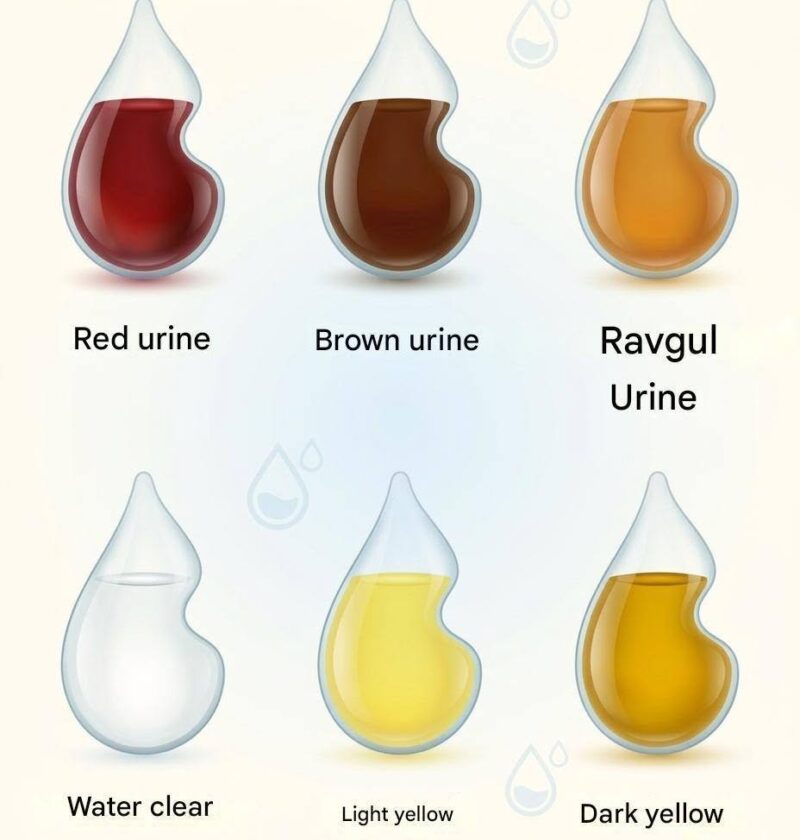
The color of your urine can give general clues about hydration and sometimes health, but it’s not a precise diagnostic tool on its own.
What different urine colors may mean
Pale yellow (straw-colored)
- Usually normal and healthy
- Indicates good hydration
Clear
- Very well hydrated
- Sometimes means you may be drinking more water than needed (usually not a problem)
Dark yellow / amber
- Often mild dehydration
- You may need more fluids
Honey or brownish
- More significant dehydration can cause this
- Can also be linked to liver issues in some cases
Pink or red
- Could be from foods (beets, berries)
- Or could indicate blood in urine (possible infection, kidney stones, or other conditions)
Orange
- Dehydration is one cause
- Certain medications or vitamin B supplements can also cause this
- In rare cases, liver or bile duct issues
Blue or green (rare)
- Often due to dyes, medications, or supplements
- Occasionally linked to uncommon infections or metabolic conditions
When to be concerned
You should consider medical advice if:
- Red/pink urine persists without food explanation
- Brown urine continues despite good hydration
- You have pain, burning, fever, or strong odor
- There are sudden or unexplained changes in color
Bottom line
Urine color is mainly a hydration indicator, not a full health test. Many changes are harmless and diet-related, but persistent or unusual colors with symptoms should be checked.
If you want, tell me what color you’re seeing and I can help interpret it more specifically.