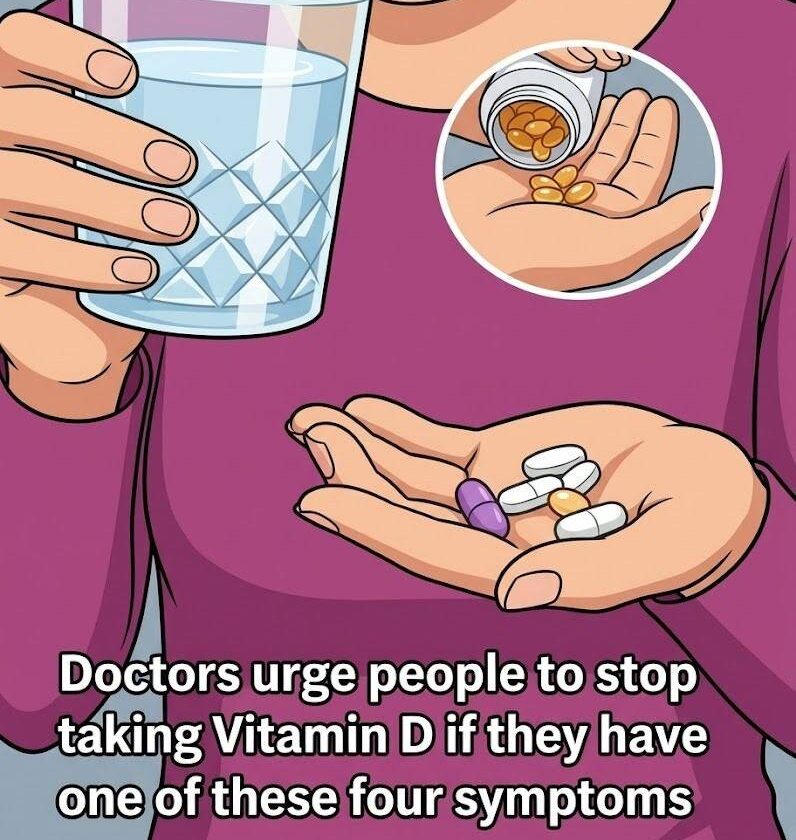
That headline is clickbait-style and oversimplifies what doctors actually say.
Vitamin D (Vitamin D) is important for bone health, immune function, and calcium balance. Problems usually don’t come from taking it in normal doses—but from taking too much over time (vitamin D toxicity), which is uncommon but real.
What doctors actually warn about
Instead of “stop immediately if you have 4 symptoms,” clinicians usually say:
- Don’t self-diagnose toxicity based on vague symptoms
- Get a blood test if overdose is suspected
- Adjust or stop supplements only under medical guidance
Symptoms that can happen with excess vitamin D (not just normal use)
If vitamin D levels become too high, it can raise calcium in the blood. Possible signs include:
- Persistent nausea or vomiting
- Loss of appetite
- Excessive thirst and frequent urination
- Weakness, fatigue, or confusion
These symptoms are non-specific, meaning they can come from many conditions (dehydration, infection, kidney issues, etc.), not just vitamin D.
Important clarification
- You should not automatically stop vitamin D just because you feel unwell.
- The correct step is to check dosage and consider a 25(OH)D blood test if there’s concern.
- Toxicity usually happens with very high doses over weeks or months, not normal daily supplementation.
If you want, tell me your dose and symptoms, and I can help you judge whether it sounds like normal side effects, overdose risk, or something unrelated.