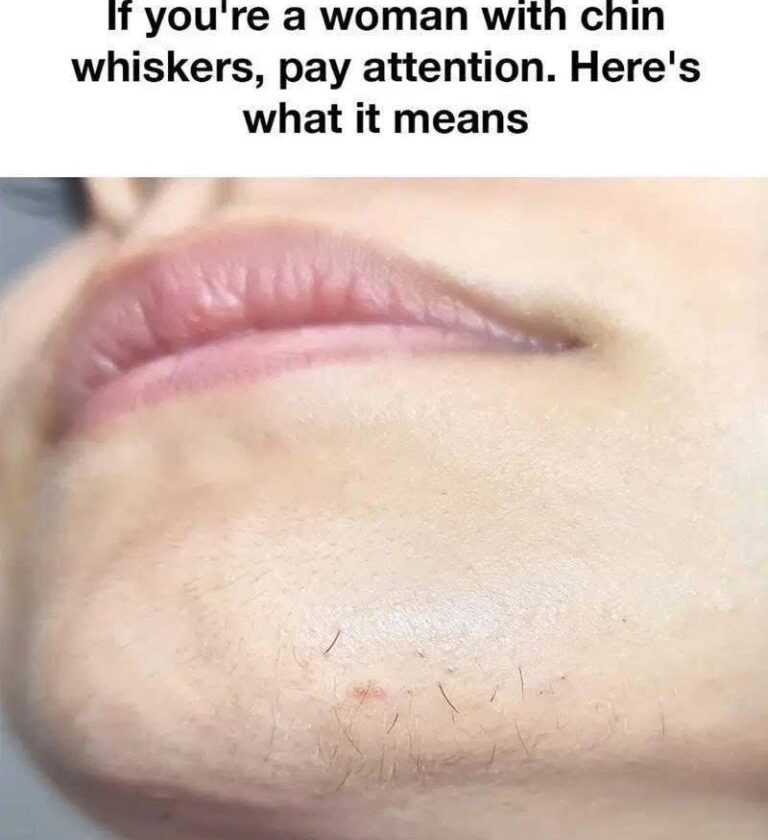
Chin whiskers in women are more common than many people realize and can vary widely in appearance. Some women notice only a few fine, light hairs, while others may develop thicker, darker, or coarser strands that become more noticeable over time. Facial hair growth patterns are influenced by genetics, hormones, age, and certain medical conditions, and the experience differs from person to person.
One of the most common reasons for chin whiskers is hormonal fluctuation. Androgens — hormones often associated with male traits but naturally present in women as well — can stimulate hair follicles on the face. During puberty, pregnancy, menopause, or times of hormonal imbalance, these hormones may increase relative to estrogen levels, leading to more visible facial hair growth. Aging can also play a role, particularly after menopause, when estrogen declines and facial hairs may become coarser.
In some cases, excessive chin hair may be linked to medical conditions such as Polycystic Ovary Syndrome, a hormonal disorder that can cause irregular periods, acne, weight changes, and increased facial or body hair. Other potential causes include thyroid disorders, adrenal gland conditions, insulin resistance, or side effects from certain medications. However, many women with chin whiskers have no underlying health problem at all, especially if the hair growth is mild and stable.
The texture and growth cycle of chin whiskers can also change over time. Repeated plucking may make individual hairs seem thicker because regrowing hairs often have blunt ends, though plucking itself does not increase the number of follicles. Some women find that stress, weight fluctuations, or changes in skincare routines can make the hairs more noticeable.
There are many safe and common ways to manage chin whiskers depending on personal preference. Temporary methods include tweezing, shaving, waxing, threading, and depilatory creams. Longer-term reduction options include laser hair removal and electrolysis. Laser treatments tend to work best on darker hair with lighter skin tones, while electrolysis can target individual follicles regardless of hair color. Prescription creams may also help slow facial hair growth in some cases.
If chin hair appears suddenly, becomes significantly heavier, or is accompanied by symptoms such as deepening voice, irregular menstrual cycles, rapid weight gain, or hair loss on the scalp, consulting a healthcare professional is advisable. They may evaluate hormone levels or screen for underlying conditions.
For many women, chin whiskers are simply a normal variation of the body and become more common with age. Whether someone chooses to remove them or leave them untouched is entirely a matter of comfort and personal preference.