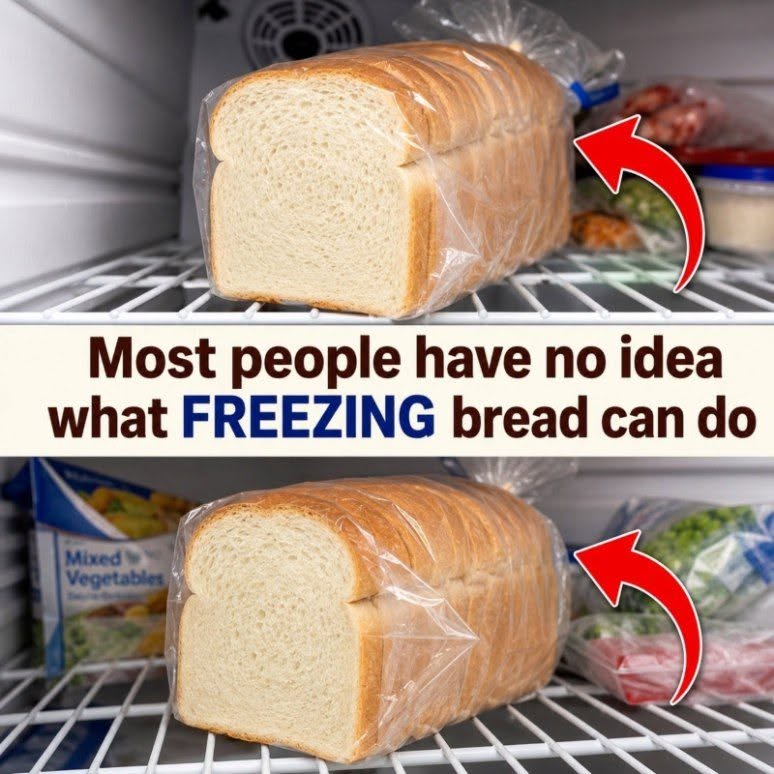
When you throw bread into the freezer, it basically goes into a “pause mode” rather than changing in any dramatic way.
The water inside the bread’s crumb turns into ice, which stops most of the staling process. That’s the key point: freezing slows down the chemical changes that make bread go stale. So frozen bread can actually stay “fresher” for weeks or even months.
But there are a few things happening at the same time:
- Starch gets locked in place: Bread stales mainly because starch molecules slowly crystallize and push moisture out. Freezing halts this process.
- Moisture freezes: The water inside forms ice crystals. If frozen too slowly or stored badly, these crystals can damage the structure a bit, making the bread slightly drier when thawed.
- Flavor stays mostly intact: Unlike refrigeration (which actually makes bread go stale faster), freezing preserves taste pretty well.
When you take it out and thaw it:
- It softens again as ice melts.
- It won’t be “fresh-baked” perfect, but it’s usually very close.
- Toasting it often restores texture even better than letting it thaw on its own.
So in short: the freezer doesn’t ruin bread—it basically puts staling on hold.