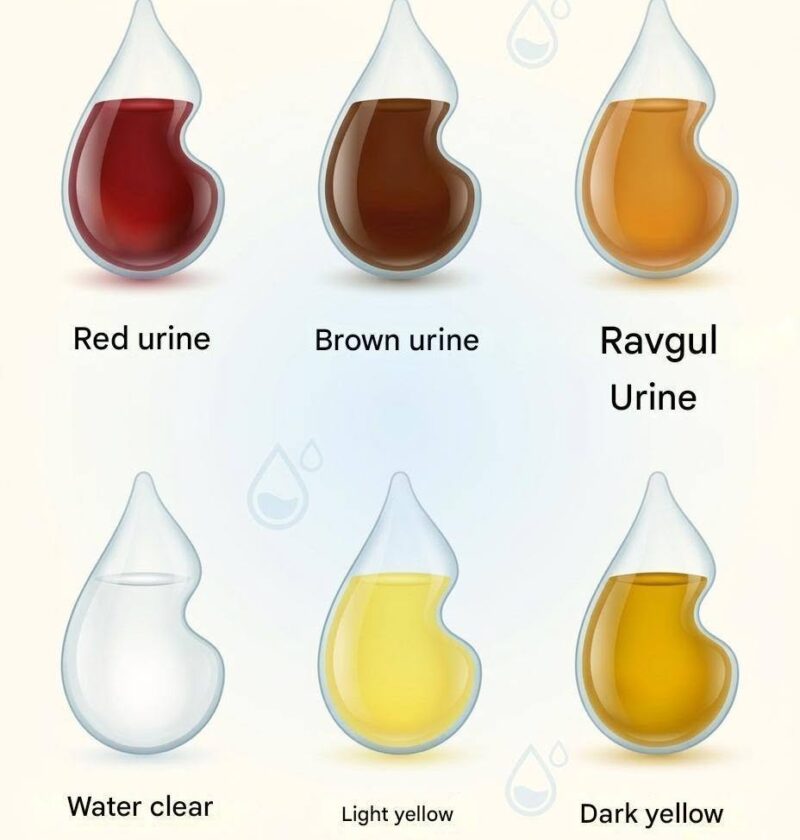
Urine color can be a useful quick indicator of hydration and sometimes health issues, though it’s not a diagnostic test on its own. Here’s what different colors may suggest:
🟡 1. Pale yellow (straw color) — Normal
This is ideal. It usually means you are well-hydrated and your kidneys are functioning normally.
🟨 2. Dark yellow — Mild dehydration
Common if you haven’t had enough water. Your urine becomes more concentrated.
👉 Simple fix: Drink more fluids.
🟠 3. Amber or honey-colored — Moderate dehydration
A stronger sign that your body needs water soon.
👉 If it continues, increase fluid intake.
🟤 4. Brown or cola-colored — Possible concern
May indicate:
- Severe dehydration
- Liver issues (bile pigments)
- Muscle breakdown (rare but serious)
👉 If persistent, it should be checked by a doctor.
🟥 5. Pink or red — Blood or food influence
Possible causes:
- Blood in urine (infection, kidney stones, etc.)
- Foods like beetroot, berries
- Some medications
👉 If not food-related, medical evaluation is important.
🟦 6. Blue or green — Unusual but possible
Causes can include:
- Certain medications
- Rare bacterial infections
- Food dyes
👉 Usually not serious, but worth monitoring.
⚪ 7. Cloudy or milky — Possible infection or crystals
May suggest:
- Urinary tract infection (UTI)
- Excess minerals or protein
👉 If accompanied by pain or burning, seek medical advice.
🟣 8. Foamy urine — Sometimes normal, sometimes not
- Can happen from fast urination
- Persistent foam may suggest protein in urine (kidney stress)
🚨 When to be concerned:
- Blood that is not food-related
- Brown/cola color that doesn’t improve with hydration
- Pain, fever, burning, or frequent urination
Bottom line:
Most urine color changes are related to hydration, but persistent unusual colors should not be ignored.
If you want, I can also give you a simple “hydration test” you can do at home using urine color and thirst level.