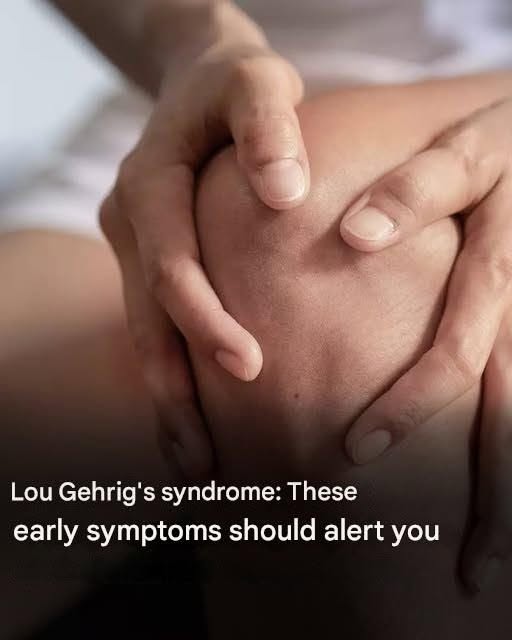
Lou Gehrig’s syndrome is another name for Amyotrophic Lateral Sclerosis (ALS). It is a progressive condition that affects nerve cells in the brain and spinal cord that control voluntary muscles.
Early symptoms can be subtle and often vary from person to person.
🧠 First symptoms of ALS (early warning signs)
1. Muscle weakness (often in one limb first)
- Trouble lifting objects or gripping things
- Weakness in one hand, arm, or leg
- Frequently dropping items
2. Clumsiness or difficulty with fine motor skills
- Trouble buttoning clothes
- Difficulty writing or using utensils
- Reduced hand coordination
3. Muscle twitching (fasciculations)
- Small, involuntary muscle twitches
- Often seen in arms, shoulders, or tongue
4. Stiffness or muscle tightness
- Muscles feel tight or cramp easily
- Reduced flexibility, especially in legs
5. Speech or swallowing changes (early in some cases)
- Slurred or slow speech
- Mild difficulty swallowing
- Voice sounds different or strained
⚠️ Important facts
- ALS usually does NOT cause pain in the early stages
- Symptoms are often gradual and worsen over time
- It is rare, and many early symptoms can also be caused by less serious conditions (nerve compression, vitamin deficiencies, stress, etc.)
🚨 When to see a doctor
Get medical evaluation if you notice:
- Progressive (worsening) weakness
- Muscle wasting or shrinking
- Persistent twitching with weakness
- Difficulty speaking or swallowing that is getting worse
Early neurological evaluation helps rule out other treatable conditions.
🧠 Bottom line
Early ALS symptoms are usually subtle muscle weakness and coordination changes, not sudden severe illness. Many other conditions can mimic early signs, so proper diagnosis is essential.
If you want, I can also explain:
- Difference between ALS and nerve compression
- Early warning signs vs harmless muscle twitching
- Or how ALS is diagnosed step-by-step