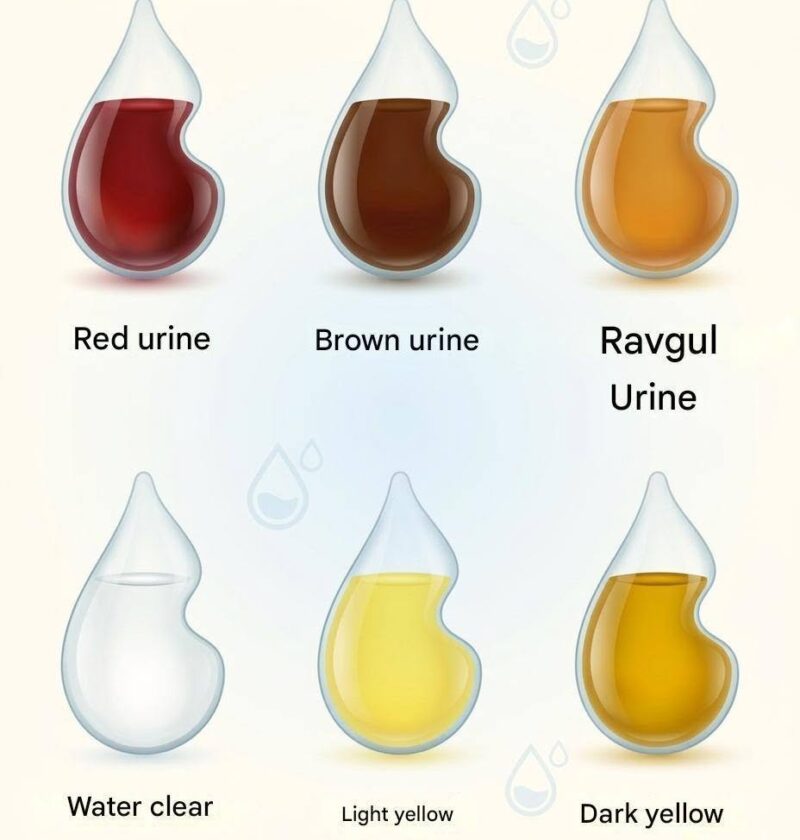
The color of your urine can give useful clues about hydration, diet, and sometimes health issues. It’s not a diagnosis on its own, but it can be an early warning sign.
Here’s a practical breakdown:
💧 Clear to pale yellow (ideal range)
- Usually means you’re well hydrated
- Pale straw color is considered normal
- Very clear urine can sometimes mean overhydration (drinking excessive water)
🟡 Dark yellow
- Often means mild dehydration
- You may need more fluids
- Common after sleep or sweating
🟠 Amber or honey-colored
- More significant dehydration
- Can also happen after heavy exercise or not drinking enough water
🟤 Brown or cola-colored (important warning)
Possible causes:
- Severe dehydration
- Liver issues (bile pigment)
- Muscle breakdown (rare but serious)
👉 If persistent, this should be checked medically
🩷 Pink or red
Possible causes:
- Beets, berries, food dyes (harmless)
- Blood in urine, which may indicate:
- Infection
- Kidney stones
- Other urinary tract issues
👉 If not food-related, it should be evaluated
🟢 Blue or green (rare)
- Certain medications or food dyes
- Sometimes bacterial infections (rare)
- Usually not serious if temporary
🧡 Cloudy urine
- Can be harmless (mild dehydration, diet changes)
- Or indicate:
- Urinary tract infection (Urinary tract infection)
- Kidney issues
- Excess minerals or protein
⚠️ When to worry
See a doctor if you notice:
- Blood-like urine not caused by food
- Persistent dark brown urine
- Cloudiness with pain, burning, or fever
- Foamy urine that doesn’t go away
🧠 Bottom line
Urine color is mainly a hydration gauge, but unusual or persistent changes—especially red, brown, or cloudy with symptoms—can signal underlying health issues.
If you want, I can give you a simple “urine color chart” you can save for quick reference.