Urine color can be a quick, informal clue about what’s going on in your body—especially hydration—but it’s not a diagnostic test on its own. Diet, vitamins, and medications can also change color.
Here’s a practical guide:
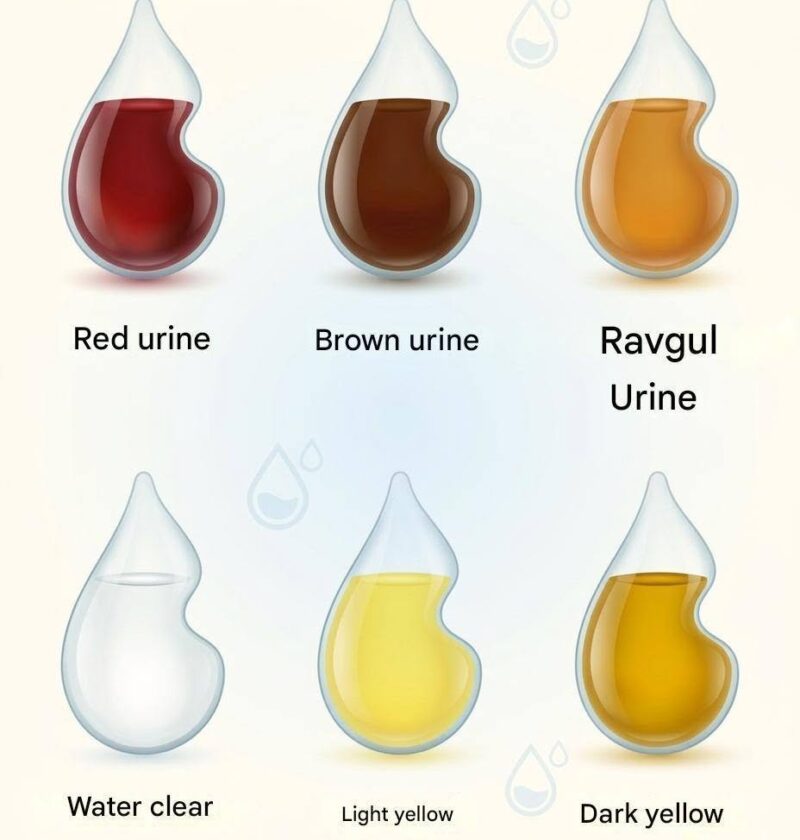
💧 Clear / very pale yellow
Usually means you’re well hydrated. If it’s consistently completely clear, you might be overhydrating, which can sometimes dilute electrolytes.
🌼 Light straw / pale yellow (ideal range)
This is generally considered normal and healthy. It suggests good hydration and normal waste processing.
🟡 Dark yellow / amber
Often points to dehydration, where urine becomes more concentrated. You may need more fluids, especially water.
🟠 Orange
Can be dehydration, but also sometimes related to:
- Certain medications or supplements
- Possible liver or bile issues in some cases, such as Hepatitis (especially if combined with yellowing skin/eyes)
🔴 Pink / red
Can be caused by:
- Blood in urine (hematuria)
- Urinary tract issues like Urinary tract infection
- Kidney stones
- Certain foods (beets, berries)
Blood in urine should always be checked if it’s not clearly food-related.
🟤 Brown / cola-colored
Can sometimes indicate:
- Severe dehydration
- Liver problems (including advanced Hepatitis)
- Muscle breakdown (rare but serious)
- Kidney conditions such as Chronic Kidney Disease
🟢 Blue / green (rare)
Usually linked to:
- Certain medications or dyes
- Rare infections or metabolic conditions
Not typically a sign of hydration issues.
🌫️ Cloudy or murky
May suggest:
- Infection like Urinary tract infection
- Crystals, salts, or dehydration
🧠 Big picture takeaway
Urine color mainly reflects:
- Hydration status (most important)
- Diet/supplements
- Possible infection or liver/kidney issues when abnormal colors persist
If you notice red, brown, or persistent cloudy urine, or symptoms like pain, fever, or fatigue, it’s worth getting checked rather than waiting it out.
If you want, I can also give you a simple “hydration chart” or explain how vitamins like B-complex can change urine color.