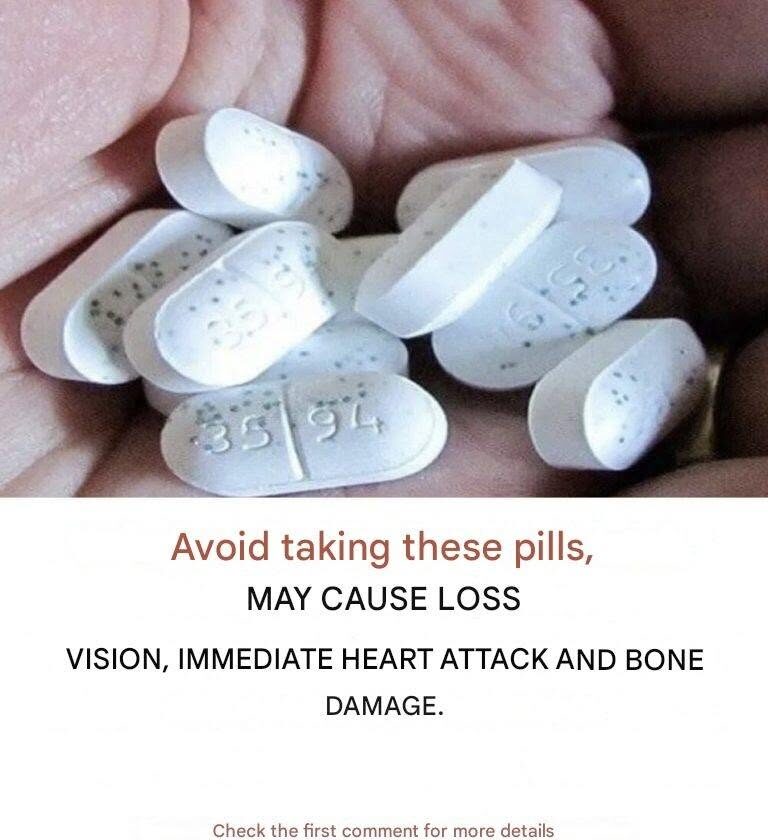
That warning is too vague to be medically meaningful on its own. Many different medications can carry a small or specific risk of blood clots or heart-related events—but the risk depends entirely on which tablet it is.
Why this kind of warning is misleading
- It doesn’t name the drug.
- It doesn’t explain how likely the risk is.
- It doesn’t say who is at risk.
- It mixes serious conditions (clots, thrombosis, heart attack) in a fear-based way.
In real medical information, warnings are specific, not general.
Medications that can be associated with clot or heart risks (examples)
Some drugs may slightly increase risk in certain people, such as:
- Estrogen-containing birth control pills
- Hormone replacement therapy
- Some cancer treatments
- Certain anti-inflammatory or immunosuppressive drugs (in specific contexts)
- Medications affecting blood clotting balance
But even in these cases:
- The risk is usually low for most users
- Doctors prescribe them when benefits outweigh risks
- Patients are monitored for warning signs
Important: risk is not the same for everyone
Clot risk depends on:
- Age
- Smoking
- Obesity
- Previous clot history
- Heart disease
- Immobility (long travel, bed rest)
- Genetic clotting disorders
Red flags that need urgent care
Seek emergency help if someone has:
- Sudden chest pain or pressure
- Shortness of breath
- One-sided leg swelling/pain/redness
- Sudden weakness or speech problems
Bottom line
A headline like this is usually clickbait or alarmist marketing unless it clearly names the medication and source.
If you tell me the exact tablet name, I can explain the real, evidence-based risk in a clear and accurate way.