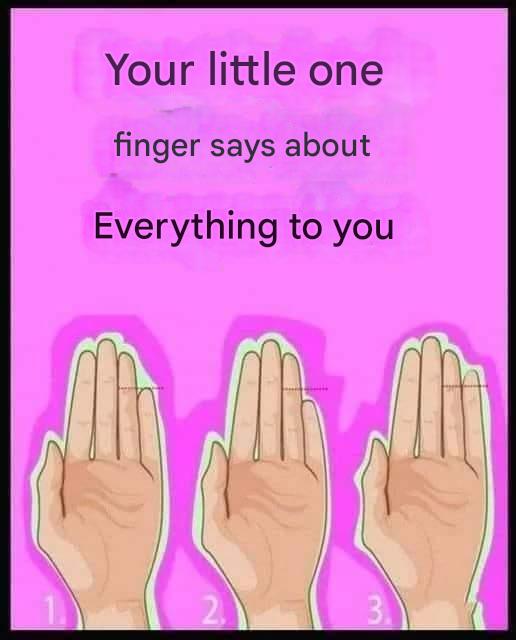
This idea comes from a mix of palmistry and modern “body-language personality” myths rather than solid science—but it’s still a fun pattern people like to explore.
One common version focuses on how your pinky finger (the “Mercury finger”) lines up compared to the top crease of your ring finger:
If your pinky reaches above that top crease, some say it suggests you’re very confident, expressive, and good at communication. You’re often described as someone who speaks directly and doesn’t hesitate to share opinions.
If your pinky sits around the same level as the crease, it’s often linked (in these interpretations) with balance—you’re seen as practical, socially aware, and someone who adapts depending on the situation.
If your pinky is shorter than that crease, the interpretation usually goes that you may be more reserved, thoughtful, and private, preferring to observe before speaking.
There’s also a related claim about finger length symmetry between both hands: differences are sometimes said to reflect how your “inner self” differs from your outward behavior—but again, that’s more storytelling than evidence-based psychology.
In reality, finger length is mostly shaped by genetics, prenatal hormone exposure, and overall hand proportions. There’s no reliable research showing pinky length can predict personality traits in any meaningful way.
If you want, I can break down where this belief comes from historically (it’s actually tied to palmistry traditions and modern internet personality quizzes).