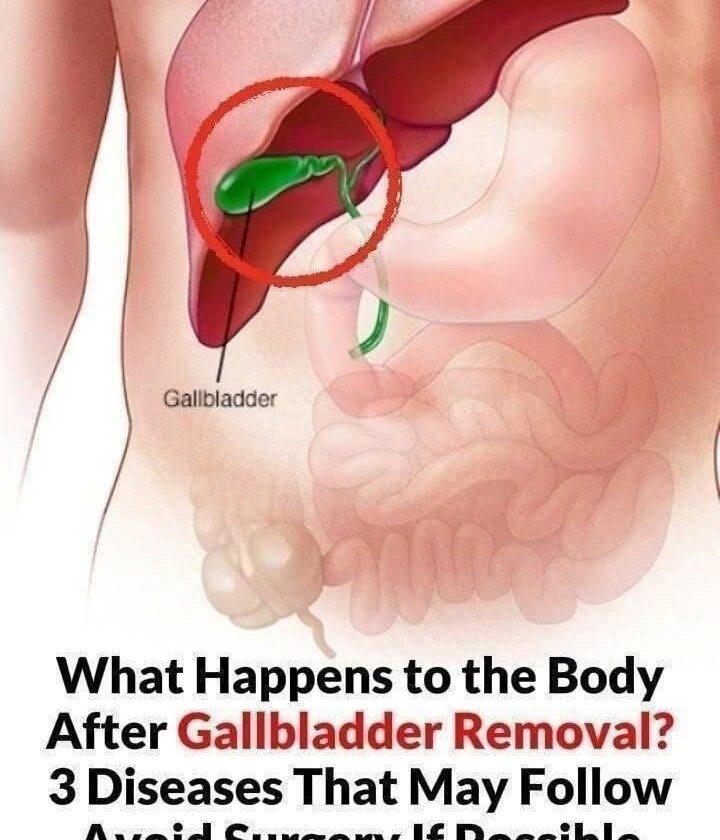
That headline is alarmist and misleading. Gallbladder removal is not something doctors recommend casually, and it is often the safest treatment when medically necessary.
The surgery is called Cholecystectomy, usually done to treat painful or dangerous gallbladder disease like gallstones.
🧠 First: Should you “avoid surgery when possible”?
Doctors generally do NOT remove the gallbladder unless there’s a clear reason, such as:
- Recurrent gallstones with pain
- Infection or inflammation (Cholecystitis)
- Blockage of bile ducts
- Pancreatitis caused by gallstones
If surgery is recommended, it usually means the risks of keeping the gallbladder are higher than removing it.
⚠️ 3 conditions some people may experience after gallbladder removal
These are possible side effects, not guaranteed outcomes:
1. Digestive changes (post-cholecystectomy diarrhea)
- Bile flows continuously into the intestine instead of being stored
- Can cause loose stools or urgency, especially after fatty meals
- Often improves over time or with diet adjustment
2. Bile reflux or stomach discomfort
- Some people experience burning, bloating, or indigestion
- This happens due to continuous bile flow into the digestive tract
3. Fat digestion sensitivity
- Fatty foods may be harder to tolerate initially
- Can lead to bloating or nausea after rich meals
- Most people adapt with time
🧠 Important reality check
- Millions of people live normally after gallbladder removal
- The body still digests fat using the liver (bile is still produced)
- Long-term severe complications are uncommon
🚨 Why the “avoid surgery” message is misleading
Leaving a diseased gallbladder untreated can lead to:
- Severe infection
- Blocked bile ducts
- Pancreatitis (potentially serious)
- Emergency surgery later
In many cases, delaying surgery is more dangerous, not less.
🧾 Bottom line
Gallbladder removal is not a “procedure to avoid when possible” in general terms—it is a standard, often necessary treatment when medically indicated. Some digestive adjustments can happen afterward, but serious long-term harm is uncommon.
If you want, I can explain diet after gallbladder removal or how to reduce symptoms like diarrhea and bloating naturally.