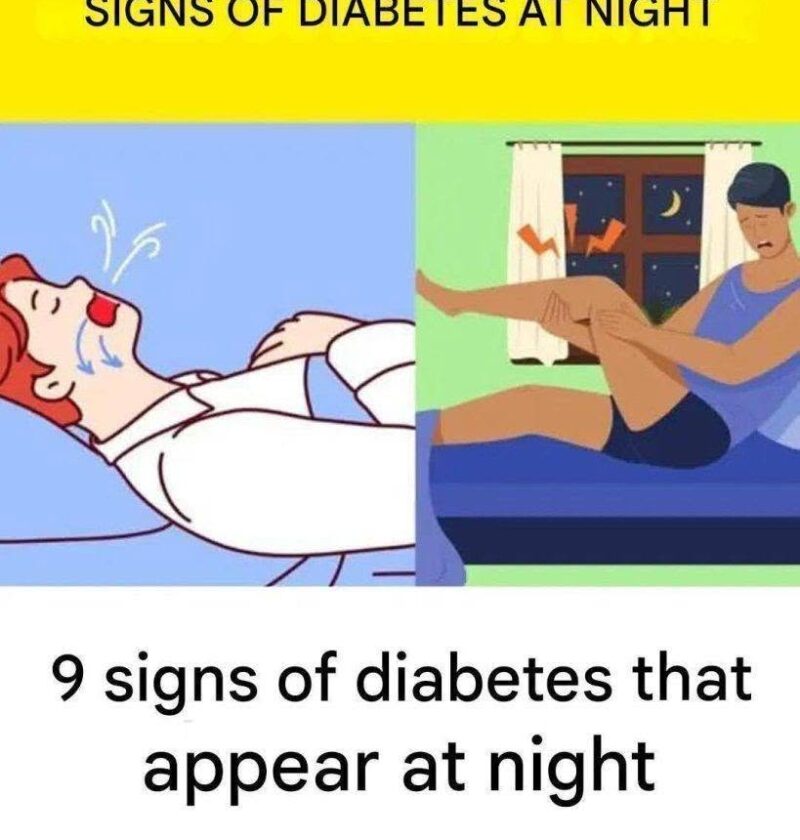
That headline is another viral-style exaggeration. Diabetes doesn’t have “night-only signs,” but some symptoms can become more noticeable at night because of blood sugar fluctuations and how the body behaves during sleep.
Here are real, medically recognized night-time patterns that can be associated with diabetes:
🌙 1. Frequent nighttime urination (nocturia)
High blood sugar makes the kidneys pull more water into urine.
Diabetes mellitus can cause:
- Waking up multiple times to urinate
- Large volumes of urine at night
🌙 2. Excessive thirst at night
- Dry mouth
- Waking up needing water repeatedly
This often happens because of fluid loss through urine.
🌙 3. Night sweats
- Can occur when blood sugar drops too low (especially in people on insulin or medication)
🌙 4. Night-time low blood sugar (hypoglycemia)
Especially in treated diabetes:
- Sweating
- Shaking
- Nightmares
- Sudden waking feeling anxious or hungry
🌙 5. Restless sleep or frequent waking
Blood sugar swings can disturb sleep quality.
🌙 6. Leg cramps or tingling at night
Nerve irritation from long-term high blood sugar can contribute to:
- Tingling feet
- Burning sensation
- Cramps
🌙 7. Itchy skin at night
Dry skin and poor circulation may cause nighttime itching.
🌙 8. Slow healing or discomfort in feet
Often noticed more at night when the body is at rest.
🌙 9. Fatigue despite sleeping
Poor glucose control can reduce sleep quality, leading to:
- Morning tiredness
- Non-refreshing sleep
⚠️ Important reality check
These symptoms:
- Are not exclusive to diabetes
- Can also come from dehydration, kidney issues, infections, or sleep disorders
- Must be confirmed with blood glucose testing, not symptoms alone
🧠 Bottom line
Night symptoms can sometimes be early clues of blood sugar problems, but they are not a reliable diagnostic checklist. Diagnosis requires proper medical tests.
If you want, I can explain the early warning signs of diabetes that are actually most reliable (day + night combined) or how testing works at home.