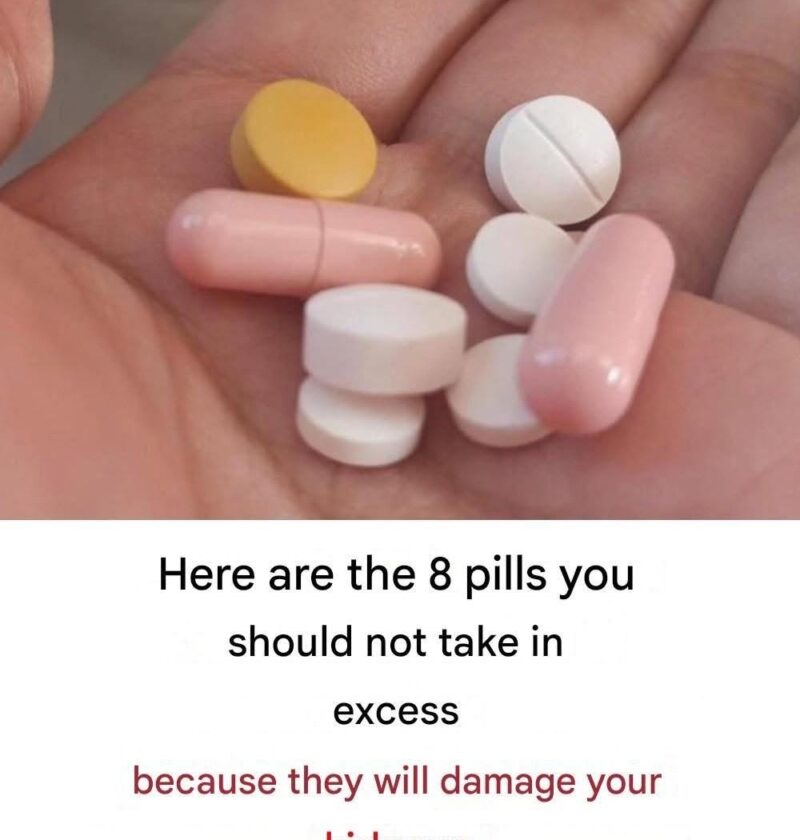
That headline is too absolute and misleading. There are no “8 pills you should never take” for everyone. Kidney risk depends on dose, duration, hydration, and existing kidney health.
That said, some medications are well known to potentially harm the kidneys in certain situations, especially with long-term use or misuse.
🧠 Medicines that can affect kidney health (context-dependent)
💊 1. NSAIDs (painkillers)
Examples: ibuprofen, diclofenac, naproxen
- Can reduce blood flow to kidneys if overused or used long-term
- Risk is higher in dehydration or older adults
💊 2. Certain antibiotics
Examples: gentamicin, vancomycin (mainly in hospital use)
- Can be toxic to kidney cells at high levels or prolonged use
💊 3. Some blood pressure medications (in specific situations)
Examples: ACE inhibitors / ARBs
- Usually protect kidneys long-term, but may need monitoring in some cases
💊 4. Diuretics (“water pills”)
- Can cause dehydration if not balanced properly
- Indirectly stress kidneys if fluid loss is excessive
💊 5. Contrast dyes (for scans)
- Used in CT scans and angiography
- Can temporarily affect kidney function in high-risk patients
💊 6. Certain antivirals
- Some older or high-dose antiviral drugs can affect kidney function
💊 7. Lithium (psychiatric medication)
- Long-term use can affect kidney function
- Requires regular monitoring
💊 8. Herbal or unregulated supplements
- Some contain unknown or harmful compounds
- “Natural” does not always mean safe for kidneys
⚠️ Important reality check
- These drugs are not automatically dangerous
- Millions of people use them safely under medical supervision
- Risk usually comes from wrong dose, long-term unsupervised