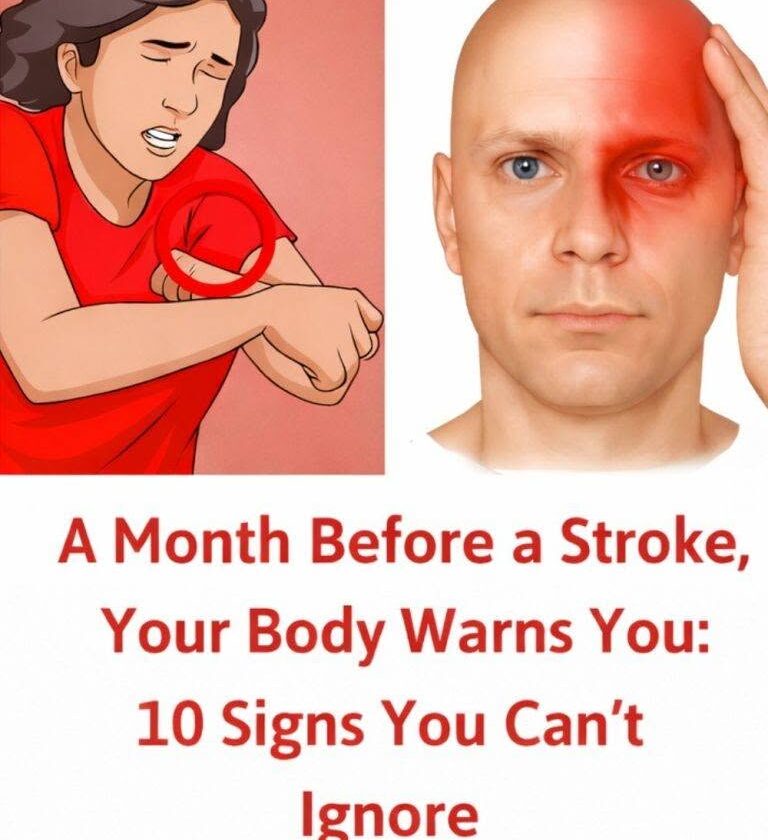
Headlines like “A month before a stroke, your body warns you: 10 signs not to ignore” are often oversimplified. The truth is important: some strokes are preceded by warning symptoms, but they are not reliable or always present a month in advance, and stroke can also happen suddenly without warning.
A stroke happens when blood flow to part of the brain is blocked or when a blood vessel bursts—this is a medical emergency related to Stroke.
🚨 Possible warning signs (especially of a mini-stroke)
Some people experience a transient ischemic attack (TIA), sometimes called a “mini-stroke,” days or weeks before a major stroke. Symptoms can include:
- Sudden weakness or numbness in face, arm, or leg (often one side)
- Temporary trouble speaking or understanding speech
- Sudden vision loss or blurred vision in one eye
- Dizziness or loss of balance
- Sudden severe headache with no clear cause
A TIA can last minutes to hours and then fully resolve—but it is a serious warning sign.
⚠️ Important reality
- There is no guaranteed 10-sign checklist that predicts a stroke a month ahead.
- Many strokes happen without any prior symptoms.
- Risk varies based on conditions like high blood pressure, diabetes, smoking, and heart disease.
🧠 Real risk factors (more reliable than “early signs”)
Higher stroke risk is linked to:
- High blood pressure
- Diabetes
- High cholesterol
- Smoking
- Heart rhythm problems (like atrial fibrillation)
- Obesity and inactivity
🚑 Emergency stroke signs (act immediately)
Use the FAST rule:
- Face drooping
- Arm weakness
- Speech difficulty
- Time to call emergency services
If any of these occur, it is an emergency—don’t wait.
✔️ Bottom line
There is no reliable “month-before” warning list. The most important early warning is a sudden neurological change, especially a TIA, which requires urgent medical attention.
If you want, I can break down the most common real-world warning signs people actually miss—and how to tell them apart from harmless symptoms like dizziness or headaches.