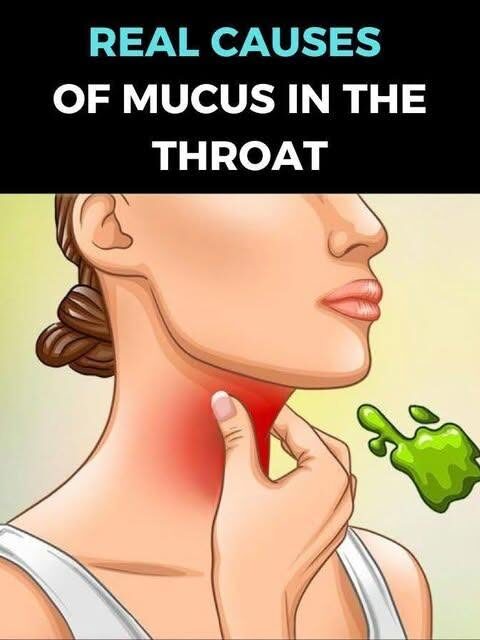
Constant phlegm or the feeling of mucus stuck in the throat is usually a symptom, not a disease itself. The most common causes are:
- Postnasal drip — mucus from the nose/sinuses drains into the throat.
- Acid reflux (GERD/LPR) — stomach acid irritates the throat and causes mucus production.
- Allergies — dust, pollen, pets, mold.
- Chronic sinusitis or frequent infections.
- Smoking or air pollution.
- Dry air and dehydration.
- Asthma or other airway inflammation.
- Certain foods in some people (very spicy foods, dairy for a few individuals, heavy fried meals).
- Less commonly: chronic bronchitis, medication side effects, or throat irritation from excessive throat-clearing.
Signs that suggest each cause
- Postnasal drip: frequent throat clearing, stuffy nose, worse at night.
- Reflux: sour taste, hoarseness, cough after meals, symptoms when lying down.
- Allergies: sneezing, itchy eyes, seasonal pattern.
- Infection: fever, thick colored mucus, facial pain.
What usually helps
If it’s postnasal drip/allergies
- Saline nasal rinse once or twice daily.
- Avoid dust/smoke exposure.
- Antihistamines such as Cetirizine or Loratadine may help.
- Nasal steroid sprays like Fluticasone can reduce inflammation.
If it’s reflux-related
- Avoid lying down for 2–3 hours after eating.
- Reduce tea/coffee, spicy foods, fried foods, and late-night meals.
- Elevate the head during sleep.
- Medications like Omeprazole are sometimes used short-term under medical guidance.
General measures
- Drink more water.
- Warm fluids and steam inhalation can loosen mucus.
- Humidify dry rooms.
- Stop smoking/vaping.
- Avoid constant throat clearing; it irritates the throat further.
When to see a doctor
Get evaluated if you have:
- Symptoms lasting more than 3–4 weeks
- Blood in mucus
- Weight loss
- Trouble swallowing
- Shortness of breath
- Persistent hoarseness
- Fever or recurrent infections
- A smoking history with chronic cough
An ENT specialist may check for sinus disease, allergies, reflux, or throat inflammation.
If you want, I can also help you narrow down the most likely cause based on your exact symptoms (for example: worse after meals, only in mornings, with cough, with blocked nose, etc.).