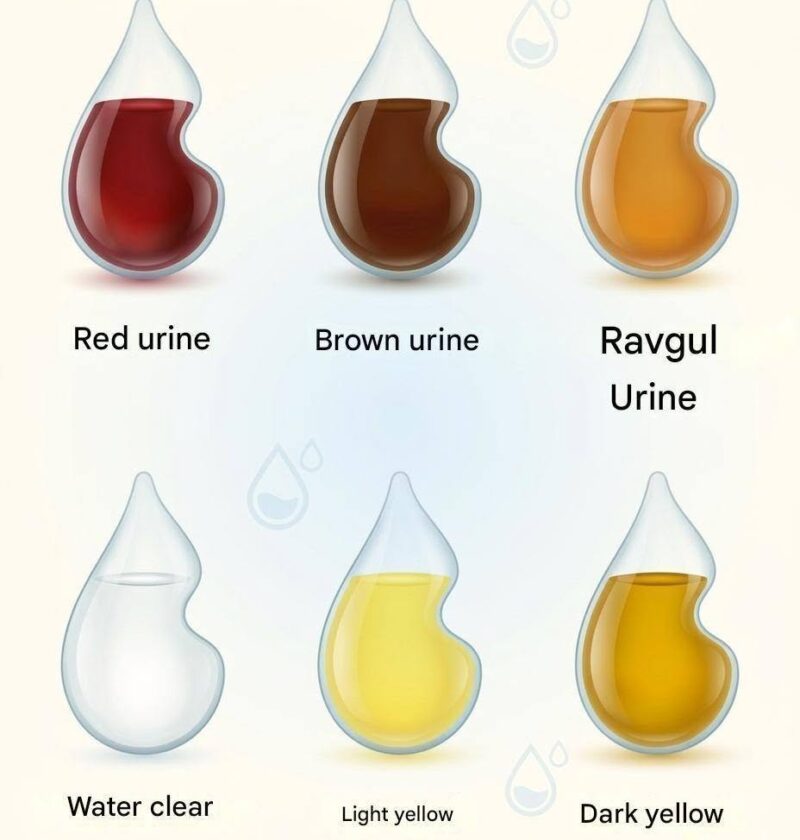
The color of your urine can give useful clues about hydration and sometimes health issues—but it’s not a diagnosis on its own. Normal urine color mainly depends on how concentrated it is and what you’ve eaten or taken.
Related organ:
- Kidneys
What different urine colors may mean
🟡 Light yellow (straw color)
- Normal and healthy
- Well hydrated
- Ideal range for most people
💛 Dark yellow / amber
- Usually dehydration
- You need more fluids
- Can also happen first thing in the morning
🟠 Orange
Possible causes:
- Dehydration
- Certain medications or vitamins
- Sometimes liver or bile issues if persistent
If long-lasting, may relate to:
- Liver disease
🔴 Pink or red
Possible causes:
- Foods (beetroot, berries)
- Menstrual blood contamination
- Or blood in urine (important warning sign)
May be linked to:
- Urinary tract infection
- Kidney stones or other urinary tract issues
🟤 Brown / cola-colored
Possible causes:
- Severe dehydration
- Liver problems (bile pigments)
- Muscle breakdown (rare but serious)
🟢 Blue or green (rare)
- Certain medications or dyes
- Rare genetic or bacterial causes
⚪ Cloudy or milky
- May suggest infection or crystals
- Can also be due to dehydration or diet
When urine color is concerning
See a doctor if you notice:
- Red or brown urine without dietary cause
- Persistent cloudy urine with pain or burning
- Foamy urine lasting many days
- Strong odor with fever or pain
Related condition:
- Chronic kidney disease
Key takeaway
Most urine color changes are caused by hydration level, food, or vitamins, not disease. The most important “healthy” sign is usually pale yellow urine.
If you want, I can also give you a simple hydration chart based on urine color so you can track it easily every day.