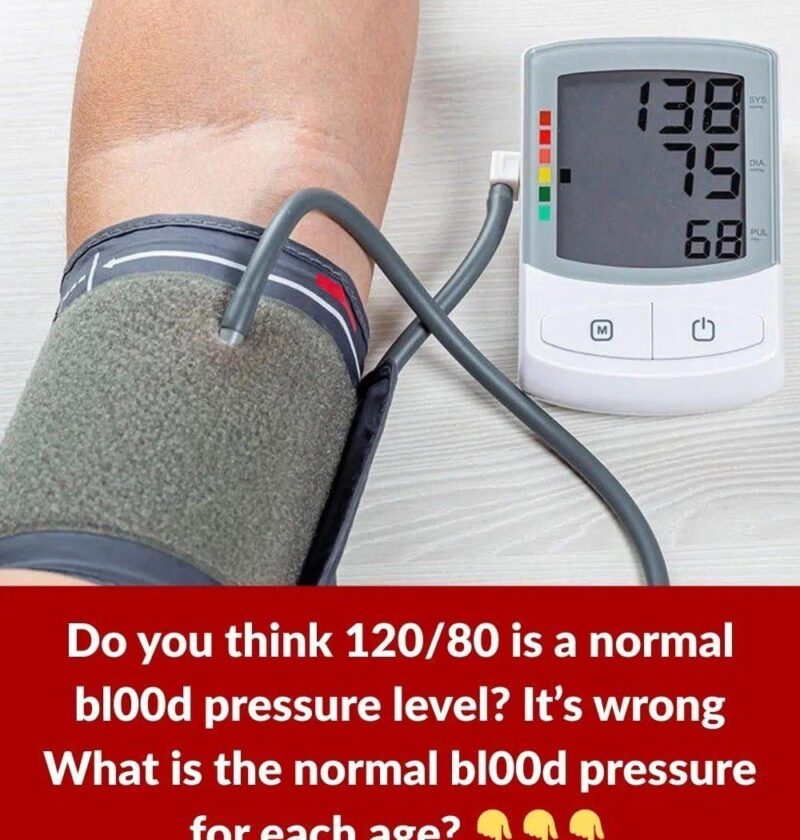
“Normal” blood pressure doesn’t change dramatically by age in healthy adults—the modern medical view is that a healthy target is similar across most adult ages, with only small differences in children and older adults.
Blood pressure is measured in mmHg and written like: 120/80
- Top number = systolic pressure
- Bottom number = diastolic pressure
Here’s a clear breakdown:
Children (1–12 years)
Normal ranges vary by height and age, but roughly:
- Systolic: ~90–110
- Diastolic: ~50–75
Doctors use growth charts, not one fixed number.
Teenagers (13–17 years)
- Normal: around 110–120 / 70–80
- Similar to adults, but slightly lower is common.
Adults (18–59 years)
Ideal range:
- Normal: below 120/80
- Elevated: 120–129 / below 80
- High blood pressure (Hypertension): 130/80 or higher
Older adults (60+ years)
- Often considered normal: below 130/80 to 140/90, depending on health status
- Many doctors still aim for below 130/80 if tolerated
Older arteries naturally become stiffer, so slightly higher readings can occur—but consistently high values still increase risk.
Important medical categories (all ages)
- Low blood pressure (Hypotension): below ~90/60
- Normal: below 120/80
- Elevated: 120–129 / <80
- Stage 1 Hypertension: 130–139 / 80–89
- Stage 2 Hypertension: ≥140 / ≥90
Key takeaway
There isn’t a completely different “normal blood pressure for each age.” Instead:
- Children = naturally lower
- Adults = ~120/80 ideal
- Older adults = same target, but sometimes slightly higher accepted depending on health
If you want, I can also show you how to measure blood pressure correctly at home or explain what each number means for heart and stroke risk.