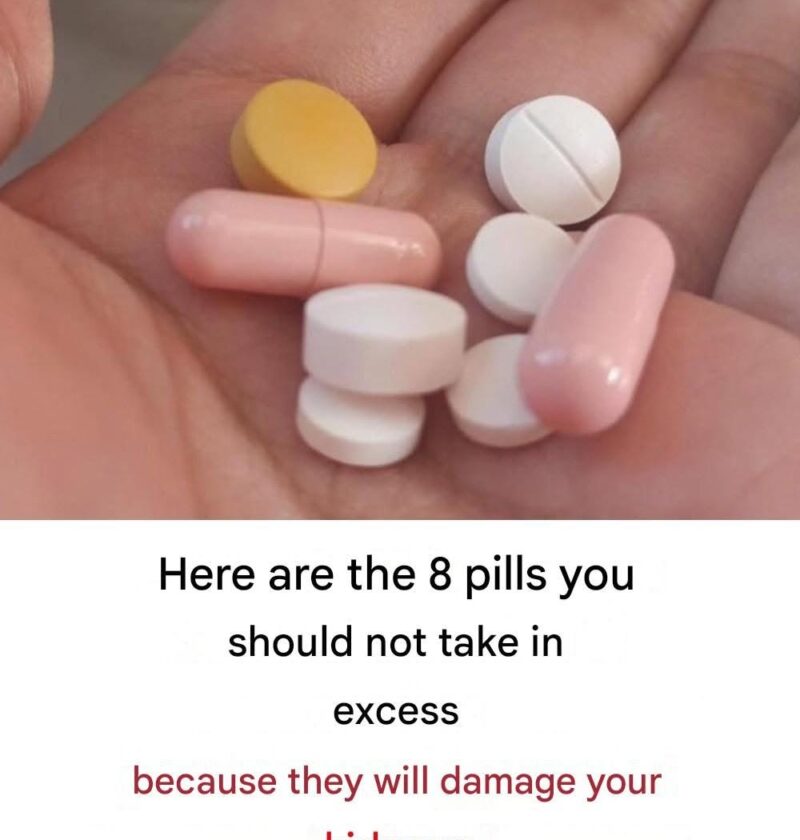
That headline is misleading. There are no “eight pills everyone should never take” because kidney risk depends on the drug, dose, duration, existing kidney health, hydration, and other conditions.
However, it is true that some commonly used medications can stress or damage the kidneys in certain situations, especially with long-term use, dehydration, or high doses.
Here are 8 types of medicines that can affect kidney function when misused or used in high-risk people:
1. NSAID painkillers
Examples: ibuprofen, diclofenac, naproxen
- Can reduce blood flow to the kidneys
- Risk increases with long-term use, dehydration, or older age
2. Certain antibiotics
Examples: aminoglycosides (gentamicin), vancomycin
- Can be toxic to kidney cells in high doses or prolonged use
- Usually safe when properly monitored in hospitals
3. Diuretics (“water pills”)
Examples: furosemide, hydrochlorothiazide
- Can cause dehydration or electrolyte imbalance if overused
- Often safe when prescribed and monitored
4. Proton pump inhibitors (PPIs)
Examples: omeprazole, esomeprazole
- Long-term use has been linked to rare kidney inflammation
- Risk is low but increases with prolonged unnecessary use
5. ACE inhibitors / ARBs (blood pressure meds)
Examples: enalapril, lisinopril, losartan
- Can slightly reduce kidney function at first
- Usually protective long-term in kidney and heart disease when monitored
6. Lithium
- Used for bipolar disorder
- Well known for potential kidney effects with long-term use
- Requires regular blood monitoring
7. Contrast dyes (for CT scans)
- Iodinated contrast can stress kidneys in vulnerable patients
- Risk is much lower today with modern techniques and hydration protocols
8. Some herbal or “natural” supplements
Examples: aristolochic acid-containing herbs, unknown bodybuilding supplements
- Can be highly toxic and a hidden cause of kidney damage worldwide
- One of the more under-recognized risks
Key reality check
Most kidney problems from medications happen because of:
- High doses
- Long-term unsupervised use
- Dehydration
- Pre-existing kidney disease
When used correctly under medical supervision, many of these drugs are safe and life-saving.
If you want, I can list medications that actually protect kidney function or explain early signs of kidney damage that people should not ignore.