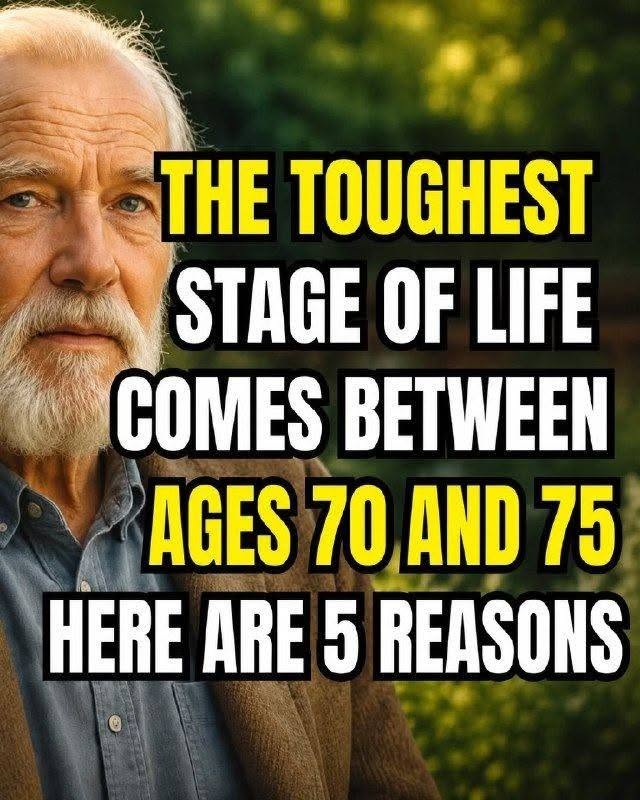
That kind of statement is a viral oversimplification. There isn’t any solid medical or scientific rule saying that ages 70–75 are universally the “hardest time of life.” What experts do recognize is that late 60s to mid-70s can be a transition period for some people, depending on health, lifestyle, and support systems.
Here are 5 real reasons this age range can feel challenging for some individuals:
1) Increased risk of chronic health conditions
Conditions like heart disease, arthritis, diabetes, and vision or hearing loss often become more noticeable in this period. Managing multiple conditions at once can feel demanding.
2) Reduced physical strength and mobility
Natural age-related changes can include:
- Lower muscle mass
- Slower recovery from illness or injury
- Joint stiffness
This can affect independence in daily activities.
3) Retirement adjustment and identity shift
Many people fully retire in this period, which can lead to:
- Loss of routine
- Reduced sense of purpose (for some)
- Financial adjustment stress
4) Loss of peers and social changes
This age group often experiences:
- Death of friends or siblings
- Smaller social circles
- Less frequent social interaction
Loneliness becomes a real risk factor here.
5) Cognitive and emotional changes (in some people)
While many stay mentally sharp, some may notice:
- Slower memory recall
- Increased anxiety about health or independence
- Greater sensitivity to stress
🧠 Important reality check
This stage of life is not universally “the hardest.” Many people in their 70s:
- Enjoy retirement freedom
- Have stable routines
- Experience strong well-being and life satisfaction
Research in gerontology often shows a “U-shaped happiness curve,” where well-being can actually improve again after midlife for many individuals.
Bottom line
Ages 70–75 can be challenging for some due to health, mobility, and social changes—but it is highly individual, not a universal rule.
If you want, I can also explain which habits make this age range significantly easier and healthier, based on longevity research.