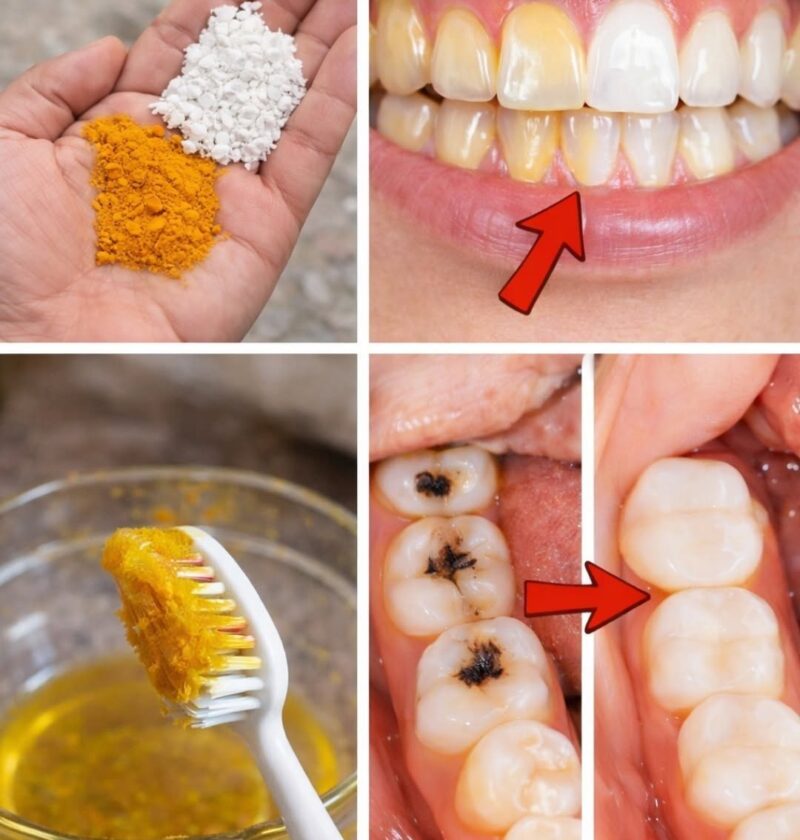
Turmeric for teeth whitening is another popular “natural remedy” claim, but the reality is a bit different from what viral posts suggest.
Does it actually whiten teeth?
- No strong scientific evidence shows that turmeric significantly whitens teeth.
- Turmeric (especially Turmeric) contains curcumin, which has mild anti-inflammatory and antimicrobial properties, but it is also strongly yellow in color.
- Instead of whitening, it can actually stain surfaces, including toothbrushes, sinks, and sometimes dental enamel temporarily.
Why do some people think it works?
- After brushing with turmeric, teeth may feel cleaner because:
- You are brushing for longer
- You are removing surface debris
- This “clean feeling” can be mistaken for whitening.
What dentists say
- Professional whitening works by using peroxide-based agents that change the internal color of enamel.
- Turmeric does not chemically whiten or lighten enamel in the same way.
Possible risks
- Temporary staining of teeth and gums
- Abrasive homemade mixtures (if combined with baking soda too often) may irritate enamel over time
Better-supported options
- Dentist-approved whitening toothpaste
- Professional whitening treatments
- Regular brushing and flossing to prevent plaque buildup
Bottom line
Turmeric may support oral hygiene mildly, but it is not an effective teeth whitening treatment and can sometimes do the opposite visually by staining.
If you want, I can tell you which natural methods actually help keep teeth visibly whiter and safe long-term.