A “super effective homemade herbicide” is a bit of a misleading idea—home mixes can kill small, young weeds, but they usually don’t work as reliably or long-lasting as commercial herbicides (and repeated use is often needed).
That said, here are a few safer, commonly used DIY weed control options and what they actually do:
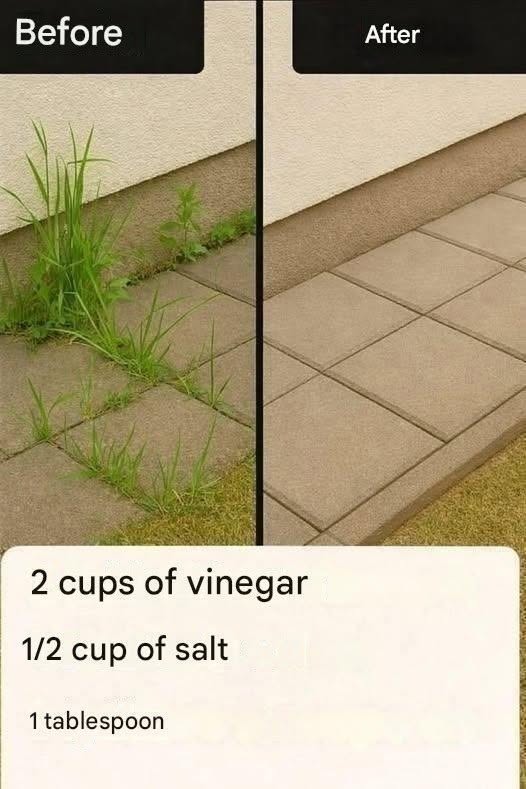
🌿 1. Vinegar + salt + dish soap (strongest common DIY mix)
🧪 Ingredients:
- 1 liter white vinegar (acetic acid ~5%)
- 2–3 tablespoons salt
- 1 teaspoon dish soap
🧹 How it works:
- Vinegar burns leaves on contact
- Salt dries out plant cells
- Soap helps it stick to leaves
⚠️ Important:
- Kills plants it touches (not selective)
- Salt can damage soil long-term
- Best for driveways, cracks, gravel—not garden beds
🌿 2. Vinegar + dish soap (safer for soil than salt mix)
- Same as above, but without salt
- Less soil damage
- Still works mainly on young weeds
🌞 3. Boiling water (simplest method)
- Pour directly on weeds in cracks or paths
- Destroys plant cells instantly
- No chemical residue
🧠 4. Mulch or cardboard (prevention method)
Not a “spray,” but very effective long-term:
- Blocks sunlight
- Prevents weed growth naturally
- Best for gardens and soil areas
🚫 What DIY herbicides cannot do well
- Deep-rooted weeds (like dandelions)
- Long-term prevention
- Selective killing (they don’t distinguish plants)
⚠️ Safety notes
- Avoid spraying near edible plants
- Don’t inhale vinegar spray mist
- Keep away from pets until dry
- Never mix with bleach or other chemicals
🧭 Bottom line
Homemade herbicides can burn weeds down quickly, but they are not as powerful or lasting as professional products. They work best for paths, patios, and small surface weeds, not full garden control.
If you want, I can suggest the most effective store-bought options vs DIY methods depending on your exact weed problem (grass, dandelions, driveway cracks, etc.).