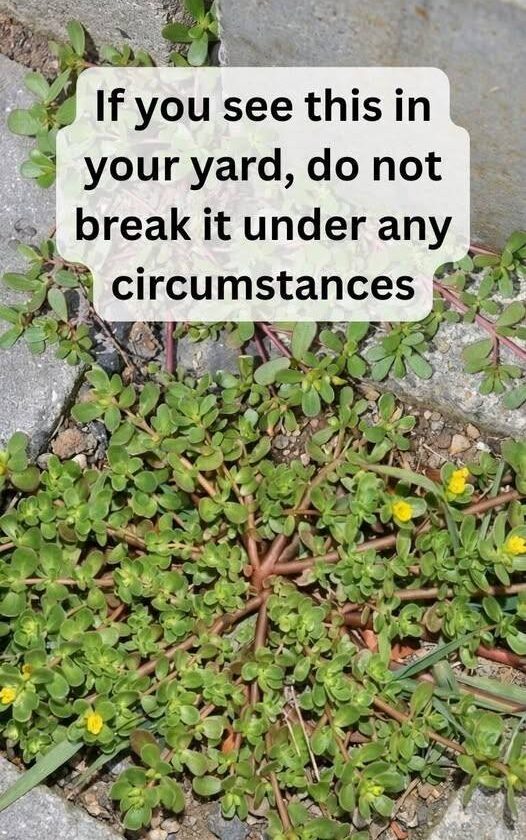
Purslane is often pulled out as a weed, but it’s actually an edible plant packed with nutrients and ecological benefits. Here are 8 solid reasons many gardeners choose to leave it growing:
- Rich in Omega-3 Fatty Acids
Purslane is one of the few leafy plants naturally high in omega-3s, especially alpha-linolenic acid (ALA), which supports heart and brain health. - Loaded With Nutrients
It contains vitamins A, C, and E, plus magnesium, potassium, calcium, and iron. Gram for gram, it can outperform many cultivated greens. - Excellent Antioxidant Source
Purslane contains betalains and other antioxidants that help combat oxidative stress in the body. - Edible and Tasty
The leaves and stems are crunchy with a mild lemony flavor. People add it to salads, soups, yogurt dishes, stir-fries, and sandwiches. - Thrives in Poor Soil
It grows where many other plants struggle, helping provide ground cover in hot, dry conditions. - Helps Retain Soil Moisture
Its low-growing succulent structure shades soil and can reduce evaporation around nearby plants. - Supports Pollinators
The small yellow flowers attract bees and beneficial insects during blooming season. - Naturally Resilient
Purslane tolerates drought and heat extremely well, making it useful in low-maintenance or climate-resilient gardens.
A few cautions:
- Make sure you correctly identify purslane before eating it. It can resemble toxic lookalikes such as Spurge, which produces a milky sap.
- Harvest from areas free of pesticides, roadside contamination, or pet waste.
- People prone to kidney stones may want moderation because purslane contains oxalates.
If you’d like, I can also show:
- how to identify purslane safely,
- recipes using purslane,
- medicinal uses studied by researchers,
- or the difference between purslane and spurge with pictures.