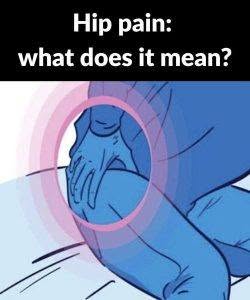
Hip pain is a symptom, not a diagnosis—it can come from several different structures around the hip joint, including bones, muscles, tendons, bursae, nerves, or even the lower back.
Common causes of hip pain
1. Joint wear and arthritis
One of the most common causes, especially with age, is Osteoarthritis
- Pain in groin, outer hip, or buttock
- Stiffness (worse in the morning or after rest)
- Reduced range of motion
- Pain worsens with walking or climbing stairs
2. Muscle or tendon strain
- From overuse, lifting, or sudden movement
- Pain is usually localized and worse with activity
- Often improves with rest
3. Bursitis
Inflammation of fluid-filled sacs around the hip (especially trochanteric bursitis):
- Pain on the outer side of the hip
- Worse when lying on that side
- Tender to touch
4. Nerve-related pain (sciatica)
- Pain may start in the lower back and travel to the hip or leg
- Can include tingling, burning, or numbness
5. Injury or fracture
More concerning, especially in older adults:
- Sudden pain after a fall
- Difficulty standing or walking
- Requires urgent medical attention
6. Other possible causes
- Referred pain from the lower back
- Hip labral tears (cartilage injury)
- Infections (rare but serious)
- Inflammatory conditions
When hip pain is concerning
Seek medical evaluation if you have:
- Severe or sudden pain
- Pain after a fall
- Inability to bear weight
- Fever or swelling
- Pain lasting more than a few weeks
Bottom line
Hip pain can be mild and temporary—or a sign of a joint condition like osteoarthritis or injury. The key is where the pain is, what triggers it, and how long it lasts.
If you want, tell me:
- Your age
- Where exactly the pain is (groin, side, buttock)
- When it started
I can help narrow down the most likely cause.