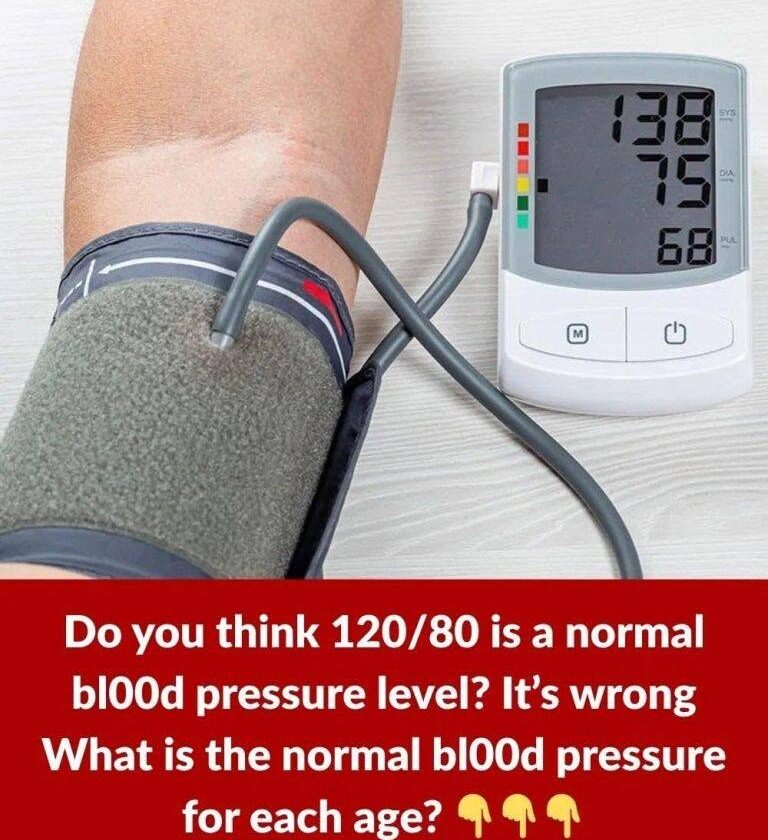
Blood pressure changes gradually with age, but modern medical guidelines don’t set “separate normal ranges for each age group” anymore. Instead, most adults are assessed using a general standard.
The most widely used reference is from guidelines similar to those of the American Heart Association.
🫀 Normal Blood Pressure (General Standard)
Adults (18+ years)
- Normal: less than 120/80 mmHg
- Elevated: 120–129 / less than 80
- High blood pressure (Stage 1): 130–139 / 80–89
- High blood pressure (Stage 2): ≥140 / ≥90
- Hypertensive crisis: ≥180 / ≥120 (needs urgent care)
👶 Children & Teens (approximate ranges)
Blood pressure varies a lot with age, height, and sex in children:
- Newborns: ~60–90 / 30–60
- Infants (1–12 months): ~70–100 / 35–65
- Toddlers (1–2 years): ~80–110 / 40–70
- School-age (6–12 years): ~90–120 / 50–80
- Teens (13–17 years): similar to adults (around 110–120 / 70–80)
👉 In children, doctors use percentiles, not fixed numbers.
👴 Older adults
- There is no higher “normal” range officially.
- Many older adults naturally have slightly higher readings due to stiffening arteries.
- However, consistently ≥130/80 is still considered high, even in older age.
⚠️ Important notes
- One reading is not a diagnosis—blood pressure should be measured multiple times.
- It varies with stress, activity, caffeine, pain, and time of day.
- Home readings and clinic readings can differ.
🧠 Bottom line
- Ideal adult BP: around 120/80 mmHg or lower
- Children: varies by age and growth charts
- Older adults: same thresholds apply, even if readings tend to run higher
If you want, I can also explain:
- What is dangerous low blood pressure
- How to naturally lower high blood pressure
- Or how to properly measure BP at home for accurate results