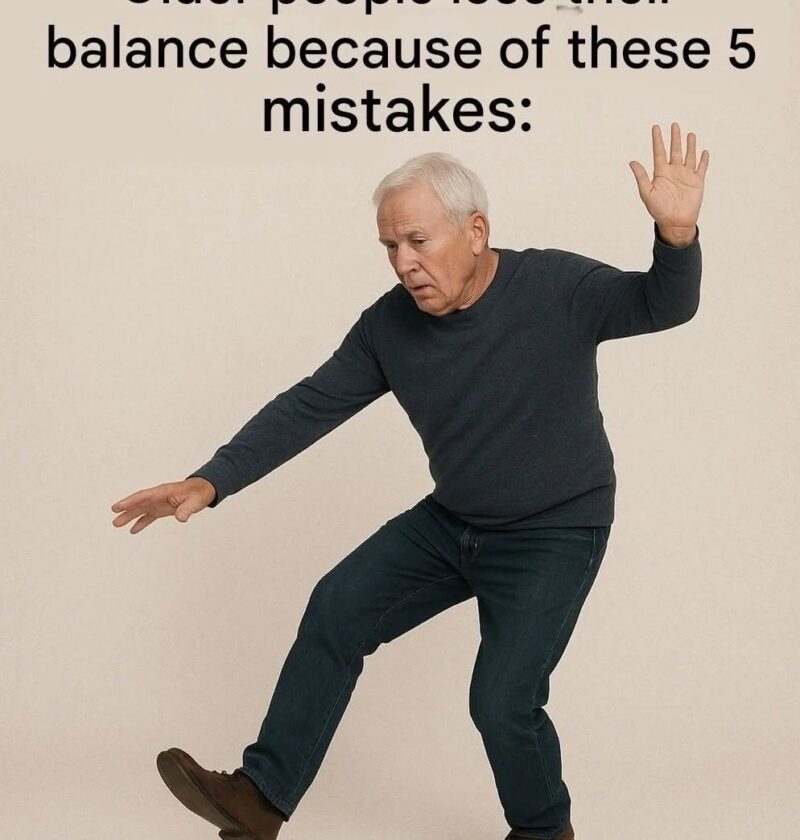
Five common mistakes that can increase the risk of balance problems in older adults:
- Ignoring vision changes
Poor eyesight, outdated glasses, cataracts, or difficulty judging distances can make it harder to notice obstacles and avoid falls. - Staying inactive for too long
Avoiding movement because of fear of falling can weaken leg muscles, reduce flexibility, and make balance worse over time. Regular walking, strength exercises, and balance activities can help maintain stability. - Wearing unsafe footwear
Loose slippers, worn-out shoes, high heels, or shoes with poor grip can increase slipping and tripping risks. Supportive, well-fitting shoes are usually safer. - Relying on furniture for support
Holding onto chairs, tables, or walls while walking may feel helpful, but it can hide worsening balance problems and may not prevent a fall if the support moves or gives way. - Not addressing medication side effects
Some medicines can cause dizziness, drowsiness, low blood pressure, or slower reactions. Reviewing medications regularly with a healthcare professional can help identify possible contributors.
Other common contributors to falls include:
- Poor lighting at home
- Loose rugs or cluttered walkways
- Weak muscles, especially in the legs
- Dehydration
- Foot pain or numbness
- Rushing to answer the phone or use the bathroom
Simple steps like improving home safety, staying physically active, checking vision and hearing, and discussing balance concerns early can reduce fall risk.