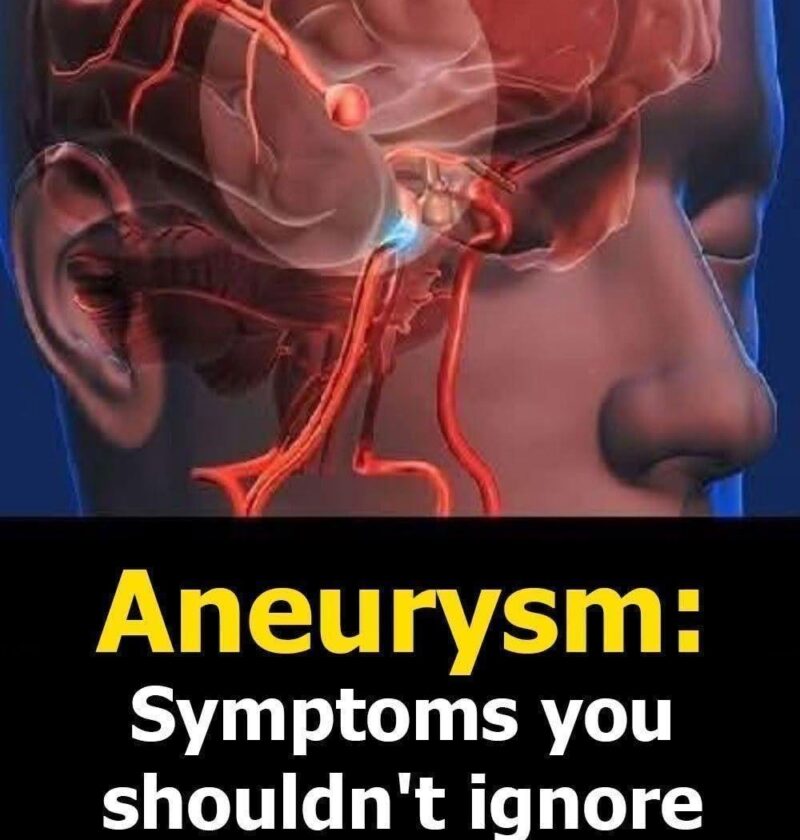
An aneurysm is a weakened, bulging area in the wall of a blood vessel. Many aneurysms cause no symptoms until they become large, leak, or rupture, which is why they can be difficult to detect.
Possible warning signs depend on where the aneurysm is located.
Possible symptoms of a brain aneurysm
An unruptured aneurysm may cause:
- Persistent or severe headache
- Pain above or behind one eye
- Blurred or double vision
- Drooping eyelid
- Numbness or weakness on one side of the face
A ruptured brain aneurysm is a medical emergency and can cause:
- A sudden, extremely severe headache (“the worst headache of my life”)
- Nausea and vomiting
- Stiff neck
- Sensitivity to light
- Confusion, seizures, or loss of consciousness
Possible symptoms of an abdominal aneurysm
An abdominal aortic aneurysm may cause:
- Deep, persistent pain in the abdomen or back
- A pulsating feeling in the abdomen
If it ruptures, symptoms can include:
- Sudden severe abdominal or back pain
- Dizziness or fainting
- Rapid heartbeat
- Signs of shock
Risk factors
Factors that increase the risk of aneurysms include:
- Smoking
- High blood pressure
- Older age
- A family history of aneurysms
- Atherosclerosis (hardening of the arteries)
When to seek emergency care
Call your local emergency services immediately if someone develops:
- A sudden, severe headache unlike any they’ve had before
- Sudden loss of consciousness
- Severe chest, back, or abdominal pain with fainting or signs of shock
These symptoms require urgent evaluation because a ruptured aneurysm is life-threatening. Early diagnosis and treatment can greatly improve outcomes.