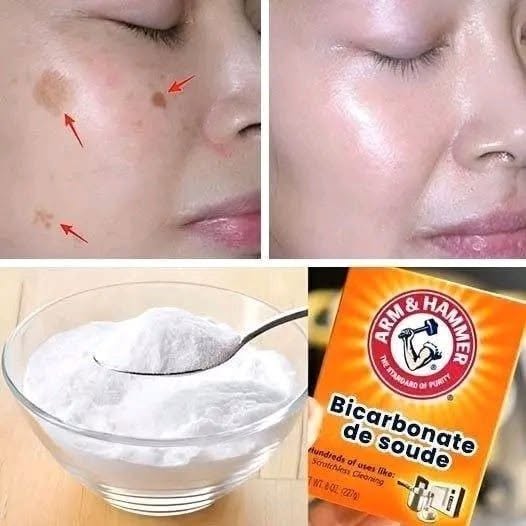
Baking soda is often promoted online as a “natural” remedy for dark spots, wrinkles, and dark circles, but there is limited evidence that it improves these concerns, and using it directly on the face can sometimes cause irritation.
Why baking soda may not be a good facial treatment
- Baking soda is alkaline, while healthy skin is slightly acidic. Applying it can disrupt the skin barrier.
- It can cause dryness, redness, burning, or increased sensitivity.
- Scrubbing with baking soda may worsen dark spots by irritating the skin and triggering more pigmentation, especially in darker skin tones.
Safer ways to target these concerns
Dark spots (hyperpigmentation)
- Use daily broad-spectrum sunscreen (SPF 30+) to prevent spots from getting darker.
- Ingredients with evidence for fading spots include:
- Azelaic acid
- Niacinamide (a skincare ingredient, not a prescription drug)
- Retinoids (such as retinol/retinoid products)
Wrinkles and fine lines
- Sunscreen is one of the most effective prevention steps.
- Retinoid products can help improve skin texture and fine lines over time.
- Moisturizers containing ingredients like Hyaluronic acid may temporarily improve skin hydration and plumpness.
Dark circles
- Causes vary: genetics, thin under-eye skin, allergies, lack of sleep, dehydration, or pigmentation.
- Helpful approaches may include:
- Treating allergies if present
- Getting consistent sleep
- Using gentle eye products designed for the area
- Wearing sunscreen around (but not too close to) the eyes
If you still want to try baking soda, avoid using it as a scrub or leaving it on your face. A patch test on a small area of skin first is safer, but a dermatologist-recommended routine is much more likely to help without damaging your skin barrier.