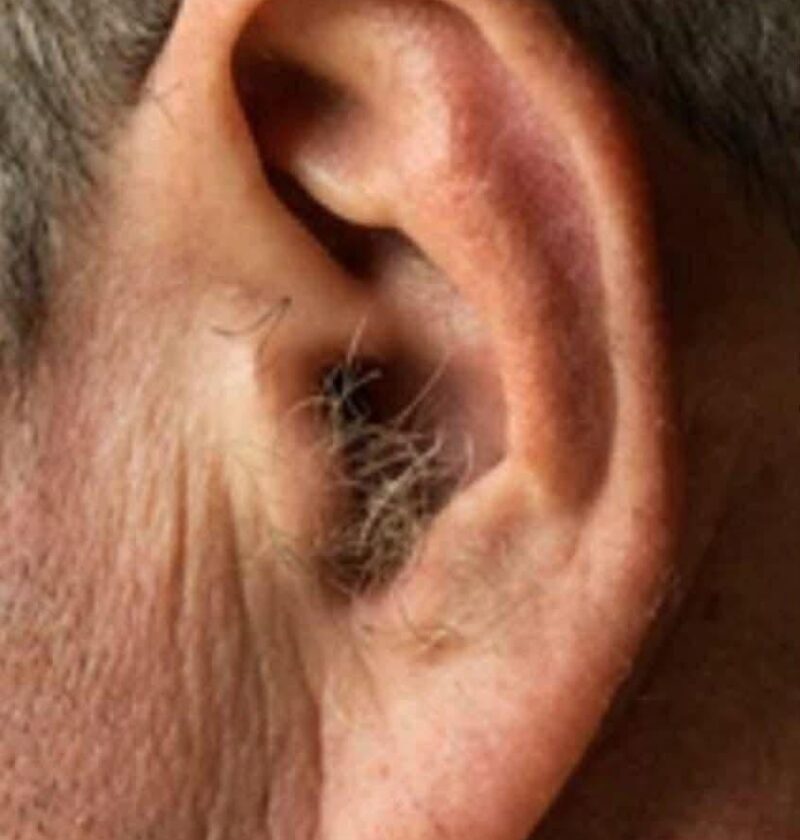
Posts that say “If your ear hairs grow, it means your body is…” are usually misleading. Ear hair growth by itself does not reliably indicate a specific health condition.
Here are the most common reasons ear hair becomes more noticeable:
- Aging: As people get older, hair in and around the ears often becomes thicker or longer due to changes in hair follicles and hormones.
- Genetics: Some people naturally develop more ear hair than others.
- Hormones: Androgens (such as testosterone) can influence hair growth, particularly in men.
Having ear hair does not necessarily mean you have:
- High testosterone
- Poor health
- Heart disease
- A vitamin deficiency
- A toxin buildup
These are common claims on social media, but they are not supported by strong scientific evidence.
When to pay attention
Ear hair itself is usually harmless. However, if you notice sudden, widespread changes in hair growth along with other symptoms—such as unexplained weight changes, fatigue, or changes in your skin or voice—it may be worth discussing with a healthcare professional, as those symptoms could point to an underlying hormonal or medical condition.
For most people, increasing ear hair is simply a normal part of aging and genetics, not a sign that something is wrong with the body.