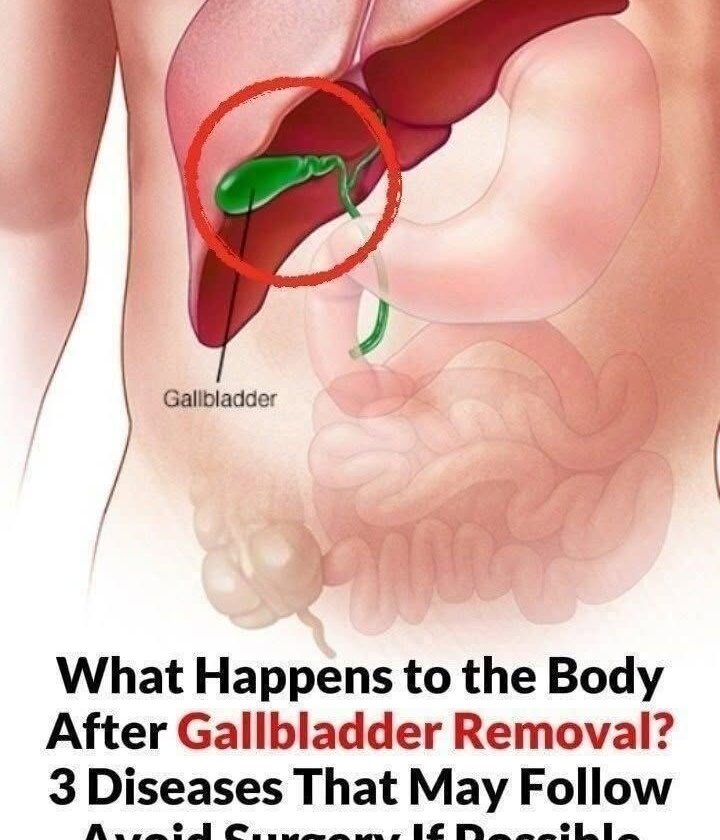
The headline “After Gallbladder Removal: 3 Conditions You Could Develop — Why You Should Avoid the Surgery When Possible” is misleading.
Gallbladder removal surgery (cholecystectomy) is one of the most common surgeries and is generally considered safe and effective when it is medically needed, especially for problems such as symptomatic gallstones, repeated gallbladder attacks, or gallbladder inflammation (cholecystitis).
After gallbladder removal, some people may experience changes, including:
- Digestive changes
- Some people have diarrhea, bloating, or changes in how they tolerate fatty foods, especially in the weeks or months after surgery.
- Bile acid–related diarrhea
- Without a gallbladder, bile flows more continuously into the intestine. In some people, excess bile acids can irritate the colon and cause ongoing diarrhea; this can often be treated.
- Post-cholecystectomy symptoms
- A small number of people continue to have abdominal discomfort or digestive symptoms after surgery, sometimes because the original symptoms had another cause.
However:
- Many people live normally without a gallbladder.
- Avoiding a recommended surgery can be risky if gallstones are causing repeated pain, infections, blocked bile ducts, or other complications.
- Surgery is not automatically needed for every gallstone finding; decisions depend on symptoms, risks, and medical evaluation.
If you have gallstones or are considering gallbladder removal, the key question is usually “Is surgery the best option for my specific situation?” rather than “Should everyone avoid it?”
If you share the reason surgery was recommended (gallstones, pain attacks, infection, polyps, etc.), I can explain what factors typically guide that decision.