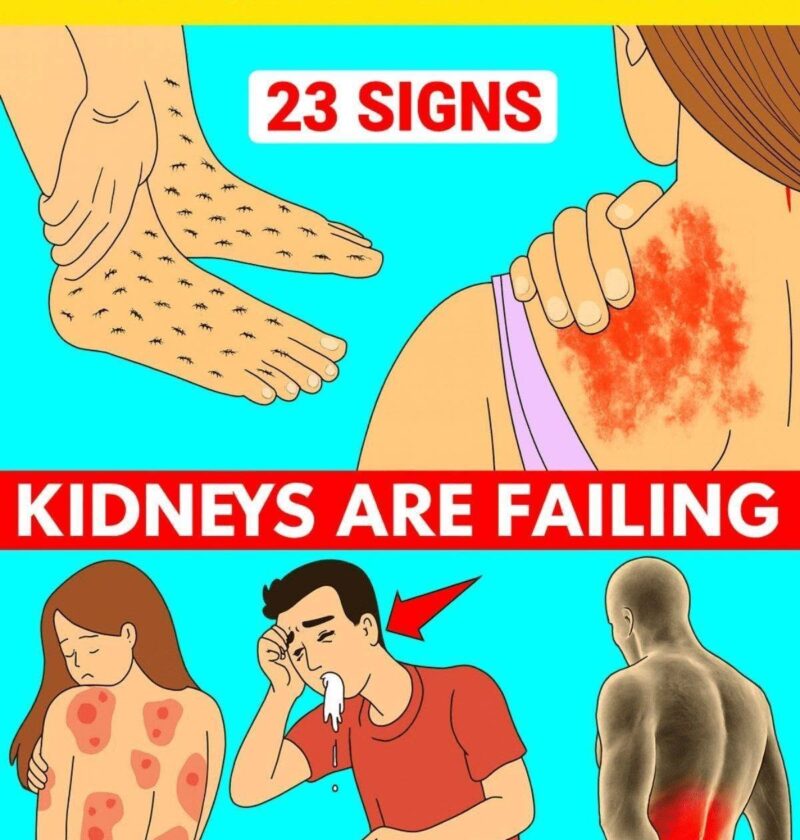
Many lists of “23 strange signs your kidneys might be in trouble” are designed to grab attention. While kidney disease can cause symptoms, many people with early kidney disease have no symptoms at all, which is why regular checkups and blood and urine tests are important if you’re at risk.
Some symptoms that can occur with kidney problems include:
- Swelling of the feet, ankles, or around the eyes
- Changes in urination (more or less frequent, foamy urine, or blood in the urine)
- Persistent fatigue or weakness
- Loss of appetite, nausea, or vomiting
- Itchy skin
- Muscle cramps
- Difficulty concentrating
- High blood pressure that is difficult to control
- Shortness of breath (especially if fluid builds up)
These symptoms are not specific to kidney disease and can have many other causes.
People at higher risk of kidney disease include those with:
- Diabetes
- High blood pressure
- Heart disease
- A family history of kidney disease
- Older age
If you notice blood in your urine, severe swelling, very little urine, severe pain in your side, or shortness of breath, seek medical attention promptly.
The best way to check kidney health is with:
- A blood test (to measure kidney function, such as creatinine and estimated GFR)
- A urine test (to look for protein or blood)
If you have a particular symptom you’re worried about, tell me what it is and I can help explain the possible causes and whether it should be evaluated.