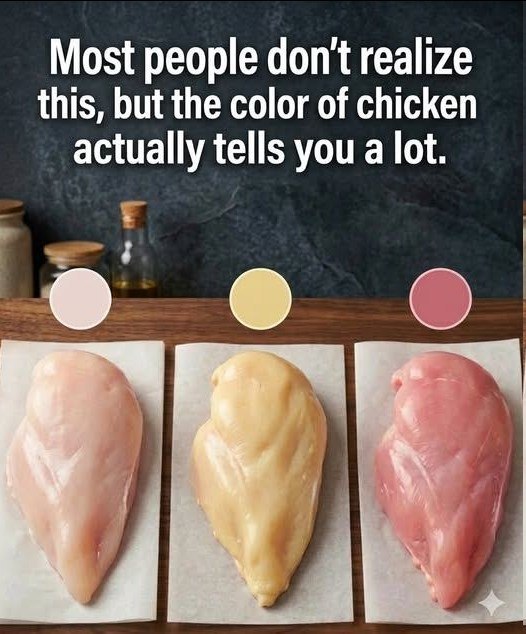
That sentence is usually leading into a myth: that the color of chicken (pale, yellow, pink, etc.) tells you its quality or safety.
In reality, chicken color is not a reliable quality indicator.
Here’s what actually matters:
Why chicken color varies
- Breed & diet: Some chickens have more carotenoids (from corn or plants), which can make the skin more yellow.
- Freshness handling: Exposure to air can make meat look slightly duller or paler.
- Fat content: More fat under the skin can affect how “yellow” it appears.
- Lighting & packaging: Supermarket lighting and plastic wrap often distort color.
What color does NOT reliably tell you
- Freshness
- Safety (bacteria can exist in perfectly normal-looking chicken)
- Nutritional quality in a meaningful way
What you SHOULD check instead
- Smell: Any sour or strong odor = bad sign
- Texture: Slimy or sticky surface = not fresh
- Expiry date & storage conditions
- Proper cooking temperature: This is the real safety factor
Important takeaway
A slightly yellow chicken isn’t “better quality,” and pale chicken isn’t “lower quality.” It’s mostly just diet + processing differences, not a quality ranking.
If you want, I can also explain how to choose the freshest chicken in a market (there are a few simple visual + smell tricks that actually work).