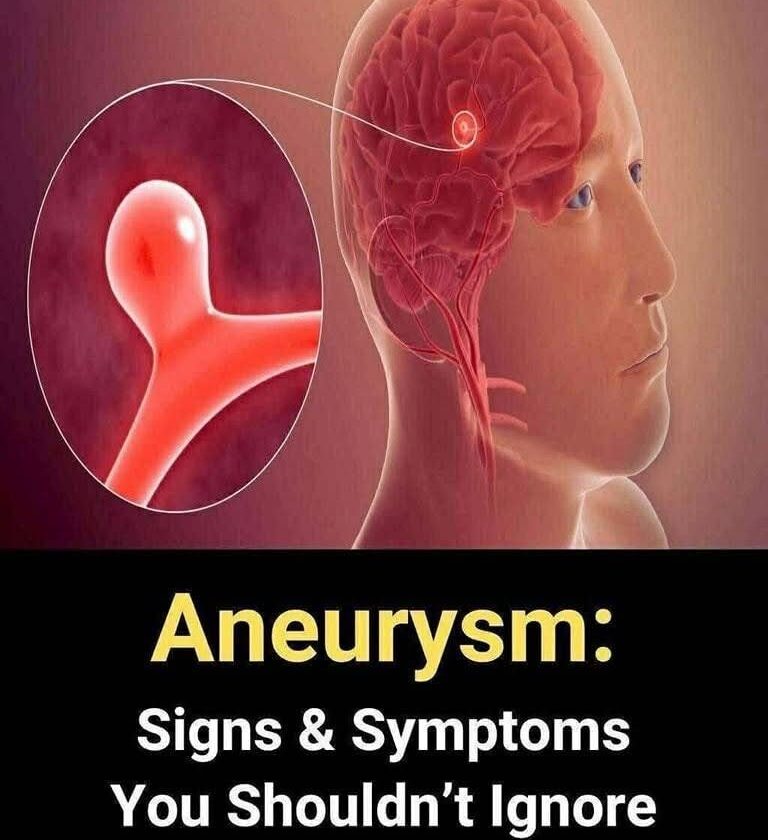
Aneurysm: Warning Signs You Shouldn’t Ignore 🚨🩺
An aneurysm is a weakened area in the wall of a blood vessel that causes it to bulge. Some aneurysms cause no symptoms and may only be found during medical testing, but if one grows or ruptures, it can become a life-threatening emergency.
Possible Warning Signs of an Aneurysm
🧠 Brain Aneurysm (Cerebral Aneurysm)
Many have no symptoms until they leak or rupture. Possible signs include:
- ⚡ Sudden, severe headache (“the worst headache of your life”)
- Nausea or vomiting with a sudden headache
- Stiff neck
- Sensitivity to light
- Blurred or double vision
- Drooping eyelid
- Seizure
- Confusion, fainting, or loss of consciousness
❤️ Aortic Aneurysm (Main Artery of the Body)
Abdominal aortic aneurysm (AAA):
- Deep, constant pain in the abdomen or side
- A pulsing feeling near the belly button
- Back pain
Thoracic aortic aneurysm (in the chest):
- Chest or upper back pain
- Shortness of breath
- Cough or trouble swallowing
- Hoarse voice
🚨 Signs of Possible Rupture (Emergency)
Seek emergency help immediately for:
- Sudden severe chest, back, or abdominal pain
- Fainting or extreme weakness
- Rapid heartbeat
- Trouble breathing
- Sudden neurological symptoms (such as weakness on one side, difficulty speaking, or confusion)
Risk Factors That Increase Aneurysm Risk
- High blood pressure
- Smoking
- Family history of aneurysm
- Older age
- Certain inherited conditions
- High cholesterol and vascular disease