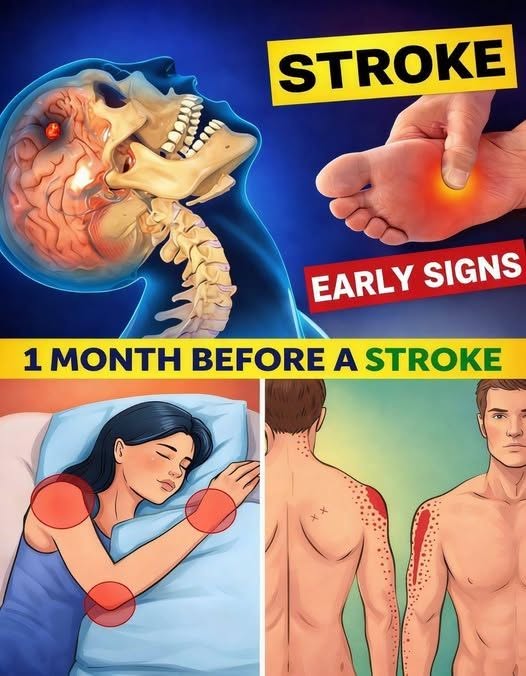
That headline is partly misleading. A stroke can sometimes be preceded by warning symptoms, especially a transient ischemic attack (TIA, or “mini-stroke”), but there is no reliable set of symptoms that predicts a stroke exactly one month before it happens. TIAs can occur hours, days, or even weeks before a stroke and should be treated as a medical warning.
Possible warning signs that need urgent attention
Use the FAST approach:
- F — Face drooping: One side of the face becomes numb or droops.
- A — Arm weakness: Sudden weakness or numbness in one arm or leg, especially on one side.
- S — Speech problems: Slurred speech, confusion, or trouble understanding words.
- T — Time to call emergency services: Fast treatment can reduce brain damage.
Other possible stroke/TIA symptoms include:
- Sudden vision changes
- Sudden dizziness, loss of balance, or trouble walking
- Sudden severe headache with no known cause
- Sudden numbness or weakness
- Temporary episodes of confusion or difficulty speaking
Ways to reduce stroke risk
- Keep blood pressure under control.
- Manage diabetes if present.
- Maintain healthy cholesterol levels.
- Avoid smoking and tobacco products.
- Exercise regularly (as appropriate for your health).
- Eat a heart-healthy diet with more fruits, vegetables, whole grains, and less excess salt.
- Maintain a healthy weight.
- Take prescribed medications consistently, including those for blood pressure, cholesterol, or blood clot prevention when indicated.
- Attend regular health checkups to monitor risk factors.
If someone experiences sudden stroke-like symptoms—even if they disappear after a few minutes—they should seek emergency medical care immediately. A TIA can be a warning that a more serious stroke may follow.