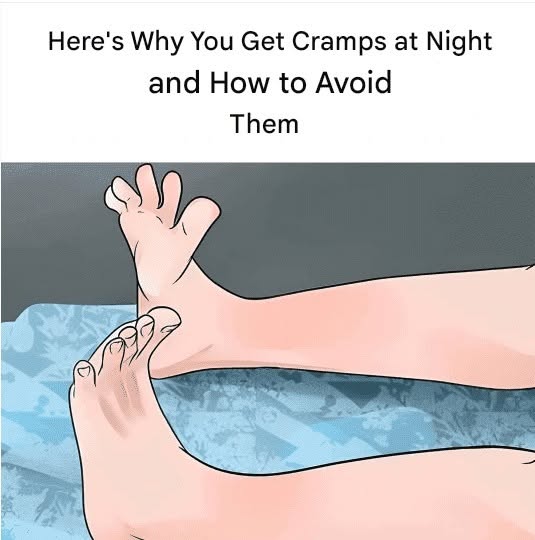
Nighttime leg cramps are sudden, painful muscle contractions that often happen in the calves, feet, or thighs while resting or sleeping. The exact cause is not always clear, but several factors can make them more likely.
Common reasons people get cramps at night
- Muscle fatigue or overuse
- Extra activity, long periods of standing, or intense exercise can strain muscles and trigger cramps later.
- Dehydration
- Not drinking enough fluids can affect muscle function, especially after sweating or exercise.
- Electrolyte imbalances
- Low levels of minerals involved in muscle function—such as magnesium, potassium, or calcium—may contribute in some people, though cramps are not always caused by a deficiency.
- Staying in one position too long
- Sitting or lying in certain positions for long periods may affect muscle comfort and circulation.
- Age-related changes
- Night cramps become more common as people get older, possibly due to changes in muscles, nerves, and circulation.
- Certain medications or health conditions
- Some medicines (including certain diuretics) and conditions affecting nerves, muscles, or blood flow may increase the risk.
What may help prevent or relieve cramps
- Gently stretch the affected muscle when a cramp starts.
- Massage the area.
- Stay hydrated throughout the day.
- Stretch your calves and legs before bedtime.
- Wear supportive footwear and avoid sudden increases in exercise intensity.
Talk to a healthcare professional if:
- Cramps are frequent, severe, or getting worse.
- You have swelling, weakness, numbness, or changes in skin color.
- Cramps started after beginning a new medication.
- They regularly disturb your sleep.
Night cramps are common, but persistent or unusual cramps are worth discussing to rule out an underlying cause.