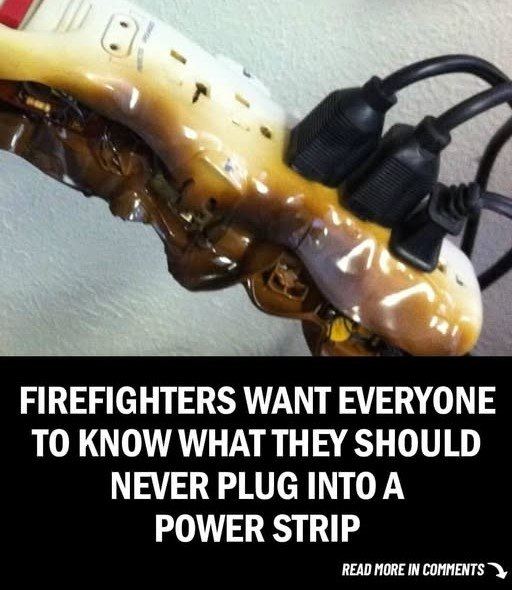
Here are some devices and appliances that are generally unsafe to plug into a standard power strip, especially inexpensive or overloaded ones:
- Space heaters
They draw a lot of current and are a major cause of electrical fires when used with power strips or extension cords. - Refrigerators and freezers
Compressors cycle on and off with high startup power demands. They should usually be plugged directly into a wall outlet. - Microwaves
High wattage can overload strips quickly. - Coffee makers, toasters, air fryers, and other heating kitchen appliances
Anything that generates heat tends to consume significant power. - Hair dryers and curling irons
These can exceed the safe load rating of many strips. - Another power strip (“daisy chaining”)
Plugging one strip into another increases fire risk and often violates electrical safety codes. - Air conditioners
Window and portable AC units typically require dedicated outlets because of their high current draw. - Sump pumps
Critical equipment should be plugged directly into a grounded wall outlet for reliability and safety. - Power tools
Saws, compressors, and similar tools can create sudden surges that overload strips. - Medical equipment
Devices like oxygen concentrators or CPAP machines are safer on dedicated outlets unless the manufacturer specifically allows surge protectors. - Large entertainment systems without proper surge protection
TVs, gaming PCs, and audio systems should use quality surge protectors rather than cheap basic strips.
A good rule:
- If the device produces heat, has a motor/compressor, or draws a lot of power, plug it directly into a wall outlet.
- Check the appliance label for wattage and compare it with the strip’s rating (commonly 10A–15A or about 1800W).
For safer setups, consider:
- UL-certified surge protectors
- Dedicated circuits for heavy appliances
- Smart power strips with overload protection
You can also tell me what specific device you’re wondering about, and I’ll tell you whether it’s safe to use with a power strip.