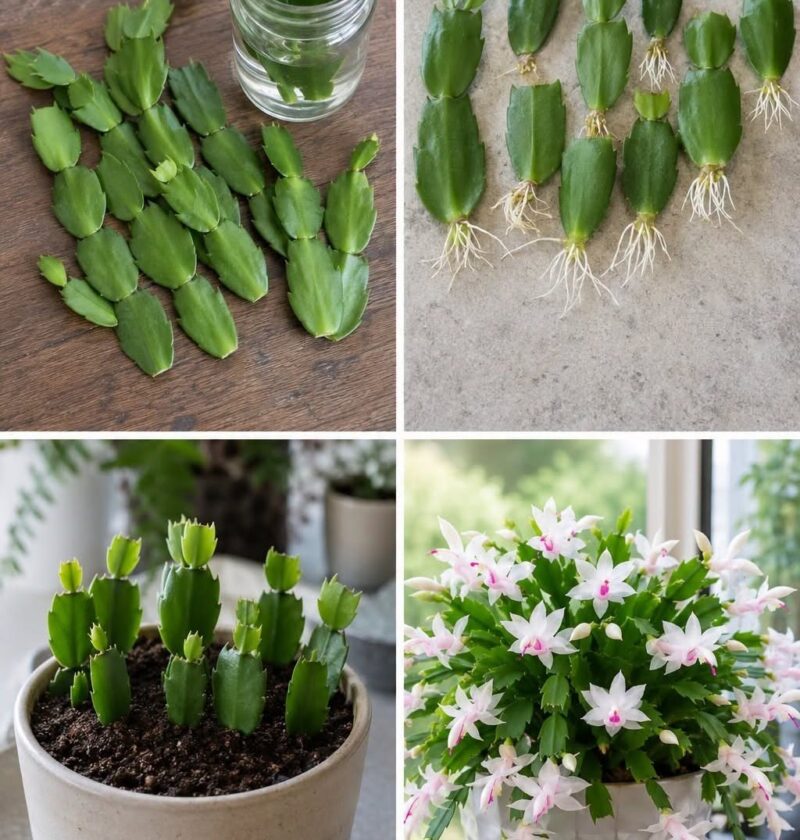
A healthy Christmas cactus can bloom more than once a year with the right care. The keys are bright indirect light, proper watering, and giving it a cool, dark rest period before its blooming season.
How to Help Your Christmas Cactus Thrive Year-Round
1. Give It Bright, Indirect Light
- Place it near an east- or north-facing window, or a bright spot with filtered sunlight.
- Avoid intense afternoon sun, which can scorch the leaves.
2. Water Wisely
- Water thoroughly when the top 1–2 inches (2.5–5 cm) of soil feels dry.
- Empty any excess water from the saucer to prevent root rot.
- Reduce watering slightly after flowering.
3. Use Well-Draining Soil
- A cactus or succulent potting mix works well.
- Make sure the pot has drainage holes.
4. Keep Temperatures Comfortable
- Ideal daytime temperatures: 65–75°F (18–24°C).
- Avoid placing the plant near heating vents, fireplaces, or cold drafts.
5. Feed During Active Growth
- Apply a balanced liquid houseplant fertilizer at half strength once a month during spring and summer.
- Stop fertilizing once flower buds begin to form.
6. Encourage More Blooms
About 6–8 weeks before you want blooms:
- Provide 12–14 hours of uninterrupted darkness each night.
- Keep temperatures around 55–65°F (13–18°C).
- Water a little less, but don’t let the plant shrivel.
7. Don’t Move It Once Buds Form
- Sudden changes in light, temperature, or location can cause buds to drop.
8. Repot Sparingly
- Christmas cacti bloom best when slightly root-bound.
- Repot every 2–3 years, preferably after flowering.
Bonus Tips for Fuller Plants
- Pinch off a few stem segments after blooming to encourage branching.
- You can root the removed segments in moist potting mix to grow new plants.
With consistent care and a proper rest period before blooming, many Christmas cacti will reward you with abundant flowers year after year—and some even produce a second flush of blooms in late winter or early spring.