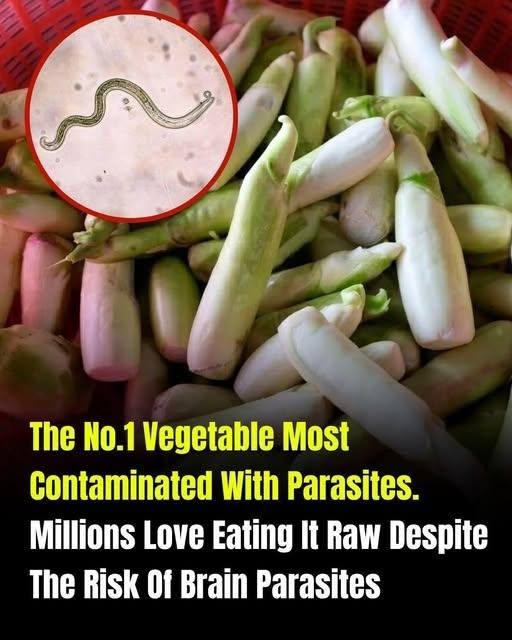
Leafy greens—especially watercress—are often cited as the vegetable most associated with parasites. A global review by the World Health Organization and researchers identified watercress as a common source of foodborne parasitic infections because it is frequently eaten raw and can become contaminated by water or animal feces.
One notable parasite linked to raw watercress is:
- Fasciola hepatica (the common liver fluke), which can infect people if they consume contaminated aquatic plants.
Other raw vegetables that can occasionally carry parasites if not properly washed include:
- Lettuce
- Spinach
- Cilantro
- Parsley
- Green onions
These vegetables can become contaminated with parasites such as:
- Giardia duodenalis
- Cryptosporidium
- Cyclospora cayetanensis
Should you stop eating raw vegetables?
No. Raw vegetables are an important part of a healthy diet, and the overall risk is low in places with good food safety practices.
To reduce the risk:
- Wash produce thoroughly under running water.
- Remove damaged outer leaves from leafy vegetables.
- Refrigerate produce promptly.
- Buy from reputable sources.
- If you’re pregnant or have a weakened immune system, be especially careful with raw produce.
So, while watercress is one of the vegetables most strongly associated with certain parasitic infections, it does not mean it is unsafe to eat. Proper handling and washing greatly reduce the risk.