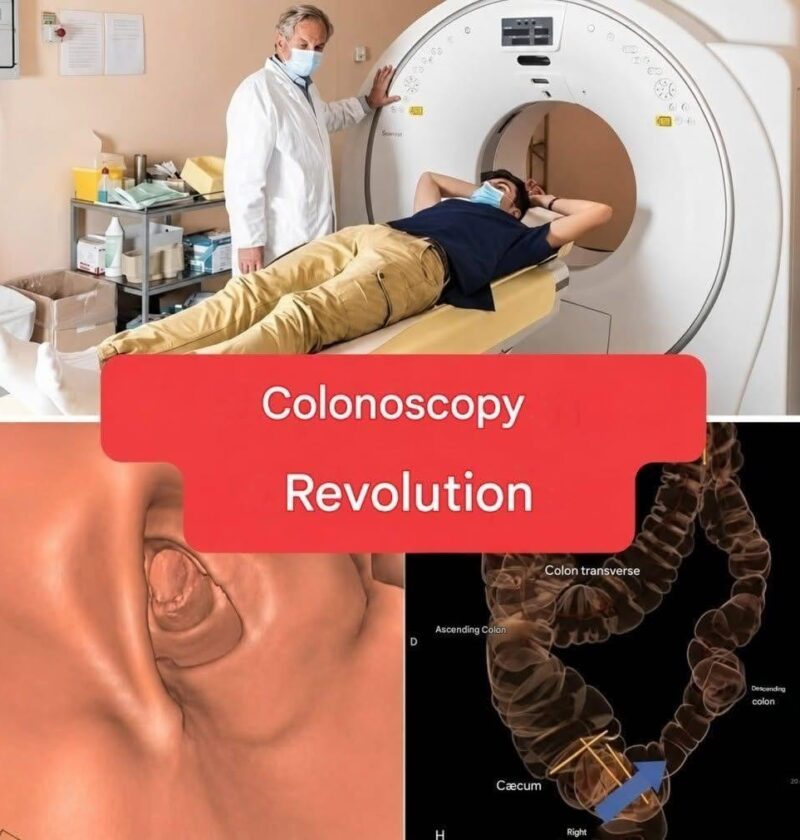
The claim that “colonoscopy will no longer be an invasive examination” refers to newer approaches being developed and used to make colorectal cancer screening easier and less invasive. However, traditional colonoscopy is still an important and widely used procedure because it allows doctors to directly examine the colon and remove precancerous polyps during the same test.
Some less invasive alternatives include:
1. Stool-based tests
These look for signs of cancer or precancer in a stool sample:
- FIT (fecal immunochemical test): Detects hidden blood in stool.
- Stool DNA tests: Look for DNA changes and blood associated with colorectal cancer.
They are easier to perform at home but, if results are abnormal, a colonoscopy is usually needed.
2. CT colonography (“virtual colonoscopy”)
- Uses CT imaging to create pictures of the colon.
- Does not require inserting a camera through the entire colon.
- If polyps are found, a traditional colonoscopy may still be required for removal.
3. Future technologies
Researchers are studying improved imaging methods, capsule-based systems, and other tools that may make screening more comfortable. Some are promising, but they are not yet a complete replacement for colonoscopy in all situations.
Bottom line: Colonoscopy has not disappeared, but colorectal cancer screening is becoming more flexible with additional non-invasive options. The best screening method depends on your age, risk factors, family history, and previous test results.