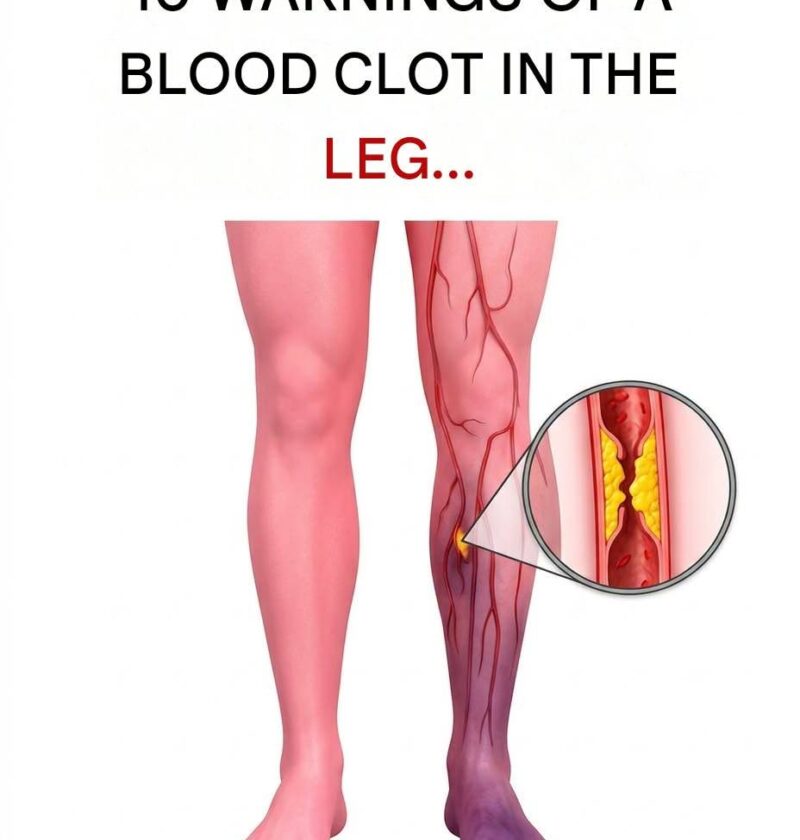
The headline “These 7 subtle signs that betray a blood clot in the leg (and how to avoid the tragedy)” refers to symptoms of a possible deep vein thrombosis (DVT)—a blood clot that forms in a deep vein, usually in the leg. The wording is dramatic, but DVT can be serious because a clot can sometimes travel to the lungs and cause a pulmonary embolism.
Possible signs of a blood clot in the leg
- Swelling in one leg
- Often affects one side rather than both legs.
- The calf, ankle, or foot may appear larger than usual.
- Pain or tenderness
- May feel like a cramp, soreness, or aching, often in the calf.
- Warmth over the affected area
- The skin around the clot may feel warmer than the surrounding area.
- Redness or skin color changes
- The area may look red, darker, or discolored.
- A feeling of heaviness or tightness
- The leg may feel unusually full, tight, or uncomfortable.
- Visible surface veins
- Some people notice veins becoming more prominent near the affected area.
- Pain that worsens with standing or walking
- Symptoms may become more noticeable when pressure is placed on the leg.
Seek urgent medical help if you have possible DVT symptoms plus:
- Sudden shortness of breath
- Chest pain (especially when breathing deeply)
- Coughing up blood
- Fainting or severe dizziness
These can be signs of a pulmonary embolism and require emergency care.
Ways to reduce DVT risk
- Stay active and avoid long periods of sitting when possible.
- Move your legs during long trips.
- Maintain a healthy weight.
- Avoid smoking.
- Follow medical advice if you have conditions that increase clot risk.
- Take prescribed blood-thinning medication exactly as directed if you have been prescribed it.
Many leg pains are caused by muscles, joints, or other conditions—not clots. A healthcare professional may need to evaluate symptoms because DVT cannot be confirmed by symptoms alone.