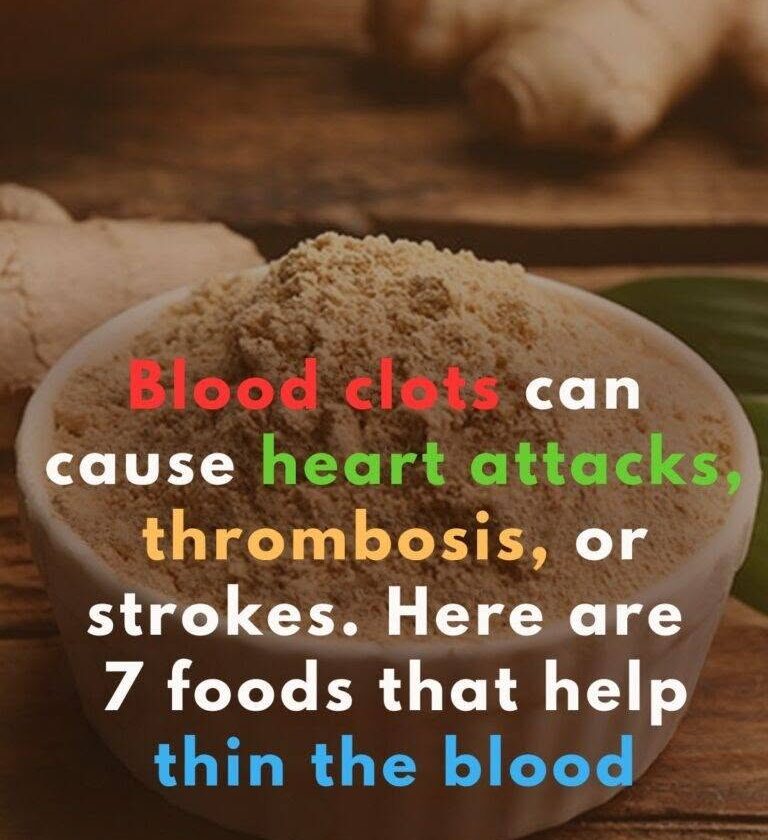
The headline “7 powerful blood-thinning foods you need to know about” is a bit misleading. Foods do not work like prescription blood thinners, and they cannot dissolve dangerous blood clots or replace medications prescribed for clot prevention. However, some foods contain compounds that may support healthy blood vessel function and normal circulation as part of a balanced diet.
Some foods often discussed for cardiovascular support include:
- Fatty fish (such as salmon, sardines, and mackerel)
- Rich in omega-3 fatty acids, which may help support heart and blood vessel health.
- Garlic
- Contains compounds that may have mild effects on platelet activity and blood pressure.
- Ginger
- Some research suggests ginger compounds may influence platelet function, though effects are generally much weaker than medications.
- Turmeric
- Contains curcumin, which has anti-inflammatory properties and is being studied for cardiovascular effects.
- Berries
- Rich in antioxidants that support blood vessel health.
- Leafy green vegetables
- Provide nitrates and other nutrients that support healthy circulation. (People taking warfarin should keep vitamin K intake consistent rather than suddenly increasing or decreasing it.)
- Nuts and seeds
- Provide healthy fats, minerals, and nutrients linked with heart health.
Important safety note
If you take blood-thinning medication (such as warfarin, apixaban, rivaroxaban, or aspirin prescribed for heart conditions), do not make large changes to your diet or start concentrated supplements without discussing it with a healthcare professional. Some foods and herbal products can affect bleeding risk or medication levels.
A heart-healthy eating pattern—rich in vegetables, fruits, whole grains, lean proteins, and healthy fats—is more important than any single “blood-thinning” food.