Here’s a balanced and medically accurate version that avoids implying these signs always mean blocked arteries.
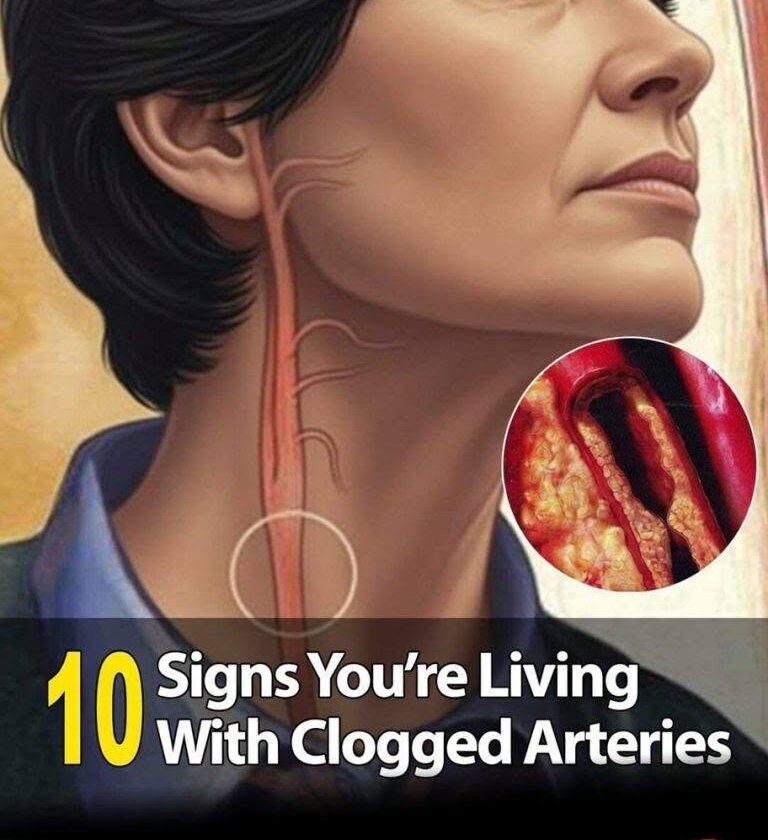
❤️ 10 Possible Warning Signs of Blocked Arteries You Shouldn’t Ignore
Blocked or narrowed arteries can reduce blood flow to the heart, brain, or limbs. Symptoms vary depending on which arteries are affected, and some people have no symptoms at all until a serious event occurs.
Possible warning signs include:
- Chest pain or pressure (angina), especially during physical activity or emotional stress.
- Shortness of breath, particularly with exertion.
- Pain, cramping, or fatigue in the legs while walking that improves with rest (a possible sign of peripheral artery disease).
- Cold feet or legs compared with the other side.
- Numbness or weakness in an arm or leg.
- Slow-healing sores or wounds on the feet or legs.
- Pain in the neck, jaw, shoulder, or arm, especially if it occurs with activity.
- Sudden dizziness, trouble speaking, or vision changes, which may be signs of reduced blood flow to the brain and require immediate medical attention.
- Fatigue or reduced ability to exercise without another clear explanation.
- Erectile dysfunction, which can sometimes be associated with blood vessel disease.
⚠️ These symptoms do not always mean you have blocked arteries. They can have many different causes, but they should not be ignored—especially if they are new, persistent, or worsening.
🚨 Seek emergency medical care immediately if you experience severe chest pain, chest pressure lasting more than a few minutes, pain spreading to the arm, jaw, neck, or back, sudden shortness of breath, or symptoms of a stroke such as facial drooping, arm weakness, or difficulty speaking.
The best ways to reduce your risk include not smoking, staying physically active, eating a heart-healthy diet, maintaining healthy blood pressure, cholesterol, and blood sugar levels, and following your healthcare professional’s recommendations.