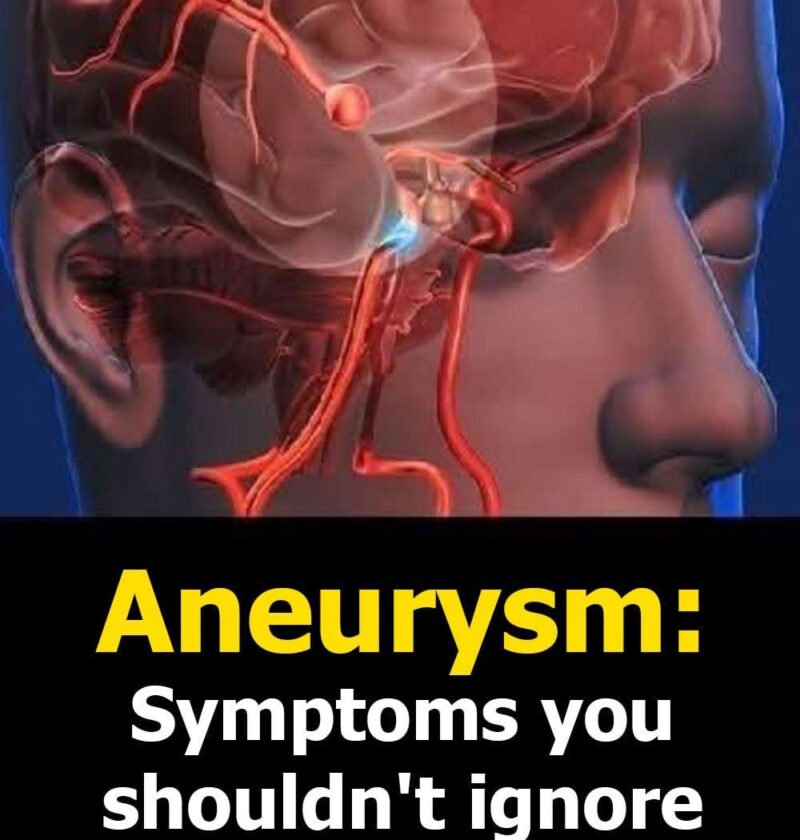
The headline “Aneurysm: Signs you shouldn’t ignore” refers to a serious medical condition, but many online posts exaggerate or create fear. An aneurysm is a weakened area in the wall of a blood vessel that bulges outward. Some aneurysms cause no symptoms and are found incidentally, while others can become life-threatening if they rupture.
Possible warning signs depend on where the aneurysm is located:
Brain aneurysm
Often there are no symptoms until rupture, but warning signs of a possible rupture include:
- Sudden, severe “worst headache of your life”
- Neck stiffness
- Nausea or vomiting
- Sensitivity to light
- Confusion, fainting, seizure
- Weakness, numbness, trouble speaking, or vision changes
Aortic aneurysm (major artery)
Possible signs may include:
- Deep, persistent pain in the chest, back, or abdomen
- A pulsating feeling or lump in the abdomen
- Shortness of breath or trouble swallowing (depending on location)
A rupture can cause:
- Sudden severe pain
- Dizziness or fainting
- Rapid heartbeat
- Signs of shock (such as pale, clammy skin or extreme weakness)
When to seek urgent help
Call emergency services for sudden severe headache, sudden chest/abdominal/back pain, fainting, new neurological symptoms, or signs of shock.
Risk factors that increase aneurysm risk include smoking, high blood pressure, older age, certain inherited conditions, and a family history of aneurysms.
If you’re asking because of a specific symptom (for example, a headache, chest pain, or abdominal pain), tell me what happened, where the symptom is, and how long it has been present.