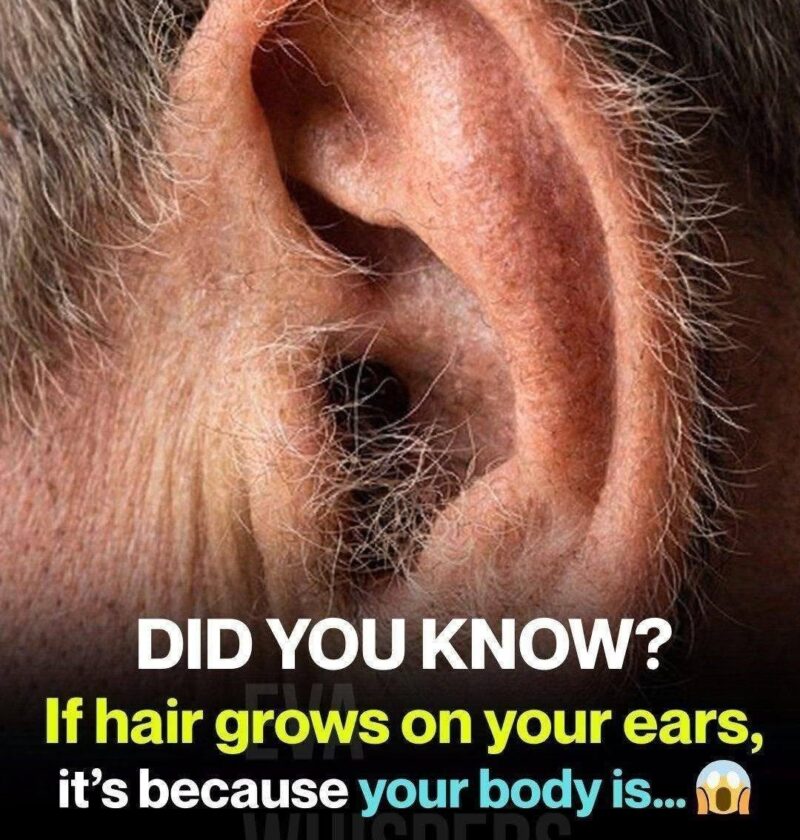
The idea that ear hair reveals your health status is often exaggerated online. In most cases, ear hair is a normal part of aging and genetics and does not provide a reliable diagnosis of your overall health.
Here’s what ear hair can mean:
- Normal aging: Hair growth in and around the ears often becomes more noticeable as people get older, especially in men, due to normal hormone changes.
- Genetics: Some people naturally grow more body hair, including ear hair.
- Hormones: Androgens (male hormones) influence hair growth patterns, which is why ear hair is more common in older men.
Some studies have explored whether excessive ear hair is associated with certain health risks, such as heart disease, but the findings are not strong enough to use ear hair as a warning sign or predictor of illness. Risk factors like high blood pressure, smoking, diabetes, cholesterol levels, and family history are much more important.
When ear changes should be checked
See a healthcare professional if you notice:
- A new lump, sore, bleeding area, or skin change on the ear
- Sudden hearing changes
- Persistent pain, discharge, or itching
If ear hair is bothersome, it can usually be managed safely by trimming it with an ear-hair trimmer. Avoid inserting sharp objects deep into the ear canal, as this can cause injury.