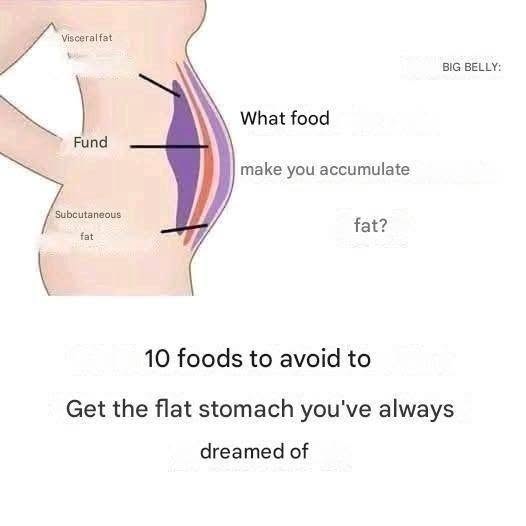
If your goal is a flatter-looking stomach, the biggest wins usually come from reducing foods that commonly contribute to bloating, water retention, or excess calorie intake. Everyone’s body responds differently, so these foods aren’t “bad,” but limiting them may help.
10 foods to reduce for a flatter stomach
- Sugary drinks
- Sodas, sweetened juices, energy drinks, and sugary coffees can add a lot of calories without making you feel full.
- They may also increase bloating for some people.
- Ultra-processed snacks
- Chips, cookies, packaged pastries, and many snack foods are often high in refined carbs, salt, and added fats, which can contribute to water retention.
- Refined white carbohydrates
- White bread, many crackers, and some baked goods can cause quick blood sugar spikes and may encourage overeating.
- Fried foods
- Fried chicken, fries, and other deep-fried items are calorie-dense and can feel heavy in the stomach.
- Processed meats
- Sausages, hot dogs, and deli meats are often high in sodium, which may cause temporary water retention and puffiness.
- Alcohol (especially beer and sugary cocktails)
- Alcohol can contribute to bloating, disrupt sleep, and add extra calories.
- Candy and desserts high in added sugar
- Frequent high-sugar foods can make it harder to maintain a calorie balance needed for fat loss.
- Foods that trigger your personal bloating
- Some people feel bloated after foods like beans, certain dairy products, onions, garlic, or artificial sweeteners. The trigger varies by person.
- Large portions of refined pasta and rice
- These aren’t automatically unhealthy, but very large portions can make it harder to maintain a calorie deficit if fat loss is the goal.
- High-sodium foods
- Instant noodles, salty sauces, fast food, and packaged meals can make you retain more water and look temporarily more bloated.
Foods that often support a flatter stomach
- Lean protein (eggs, fish, chicken, tofu, beans if tolerated)
- Vegetables and fruits
- Whole grains in appropriate portions
- Yogurt or fermented foods if you tolerate dairy
- Plenty of water
- High-fiber foods introduced gradually
A “flat stomach” is influenced by body fat levels, digestion, posture, muscle tone, hydration, and genetics—not just avoiding a specific list of foods. For many people, a consistent eating pattern and regular movement matter more than eliminating individual foods.