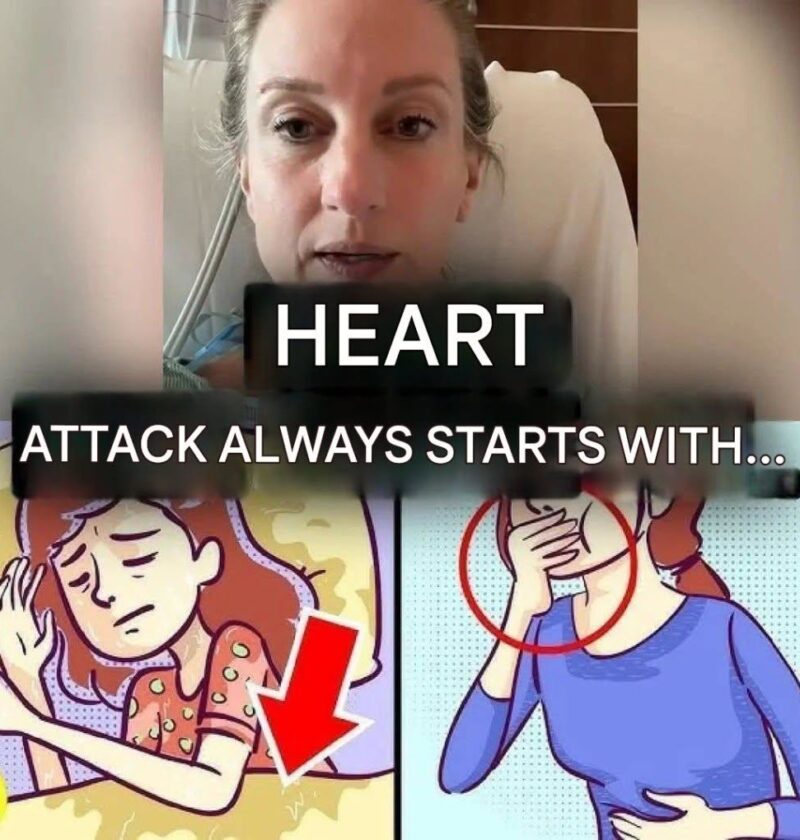
A story like “I didn’t recognize the symptoms that appeared a week earlier…” highlights an important point: heart attack warning signs are not always dramatic. Some people experience subtle symptoms days or even weeks beforehand, and recognizing them early can save lives.
Possible early warning signs that can be missed
- Unusual fatigue
- Feeling extremely tired without a clear reason.
- Difficulty doing normal activities that were previously easy.
- Chest discomfort (not always severe pain)
- Pressure, squeezing, fullness, burning, or tightness.
- It may come and go rather than stay constant.
- Shortness of breath
- Feeling winded during normal activities or at rest.
- May occur with or without chest discomfort.
- Pain or discomfort in other areas
- Discomfort can spread to the:
- Arm (often the left, but not always)
- Shoulder
- Back
- Neck
- Jaw
- Upper abdomen
- Sleep problems, anxiety, or a sense that something is wrong
- Some people report unusual restlessness or anxiety before a heart event.
- Sweating, nausea, or dizziness
- These can occur, especially in some people who do not have classic chest pain.
Why symptoms can be missed
Heart attack symptoms vary widely. They may be mistaken for:
- Stress or anxiety
- Indigestion or acid reflux
- Muscle strain
- Lack of sleep
- A normal part of aging
This is especially important because heart attacks can happen in people in their 40s, including those who feel generally healthy.
When to seek emergency help
Call emergency services immediately if you experience:
- Chest pressure, squeezing, or discomfort lasting more than a few minutes or returning repeatedly
- Shortness of breath with chest discomfort
- Fainting or severe weakness
- Sudden sweating, nausea, or pain spreading to the arm, jaw, back, or neck
Reducing risk in your 40s
Helpful steps include:
- Checking blood pressure, cholesterol, and blood sugar regularly
- Avoiding smoking and tobacco
- Exercising regularly
- Maintaining a healthy weight
- Managing stress and getting adequate sleep
- Following a heart-healthy eating pattern
A heart attack at 46 is a reminder that cardiovascular risk is not only an issue for older adults. Persistent or unusual symptoms—especially new ones—deserve medical attention rather than being ignored.