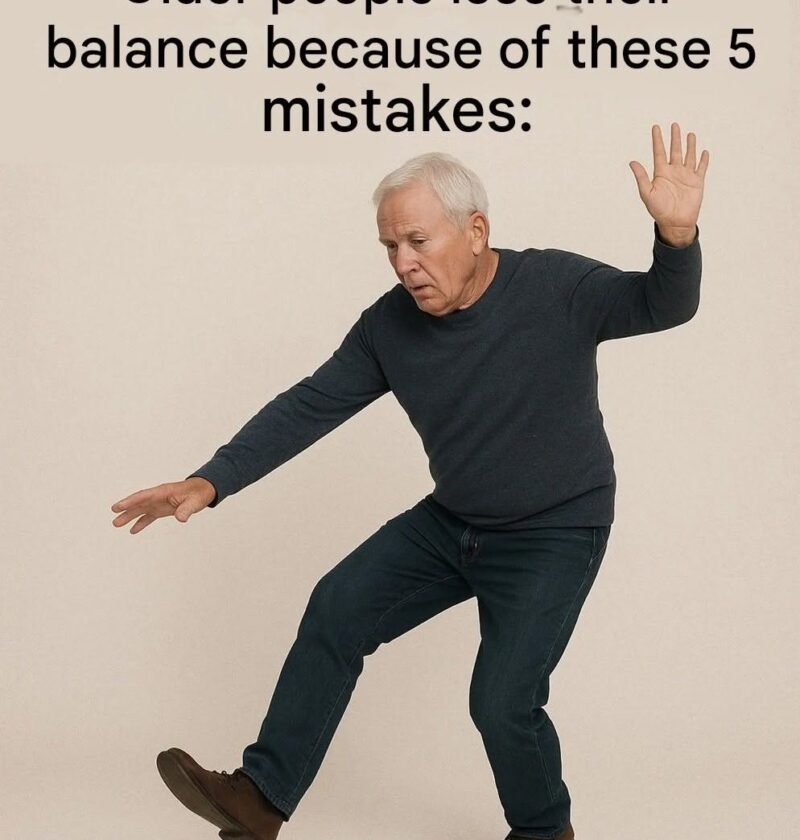
The headline “5 common mistakes that cause older people to lose their balance” points to a real concern: falls become more common with age, but they are usually caused by a combination of factors, not one single mistake.
Common contributors include:
- Not staying physically active
- Muscle weakness, reduced leg strength, and poorer coordination can make it harder to recover from a stumble.
- Balance exercises and strength training can help maintain stability.
- Wearing unsafe footwear
- Slippery soles, loose slippers, or poorly fitting shoes can increase fall risk.
- Supportive, well-fitting shoes are generally safer.
- Ignoring vision problems
- Poor vision makes it harder to judge steps, obstacles, and uneven surfaces.
- Regular eye checks can help identify problems.
- Keeping a hazardous home environment
- Loose rugs, clutter, poor lighting, and missing grab bars in bathrooms can create fall risks.
- Simple home adjustments can make a big difference.
- Not reviewing medications
- Some medicines can cause dizziness, drowsiness, or drops in blood pressure, which may affect balance.
- A doctor or pharmacist can review medications and possible side effects.
Other factors that can affect balance include inner-ear problems, nerve conditions, dehydration, and blood pressure changes.
If someone has new balance problems, repeated falls, dizziness, weakness, or trouble walking, it’s important to discuss it with a healthcare professional because some causes can be treated.