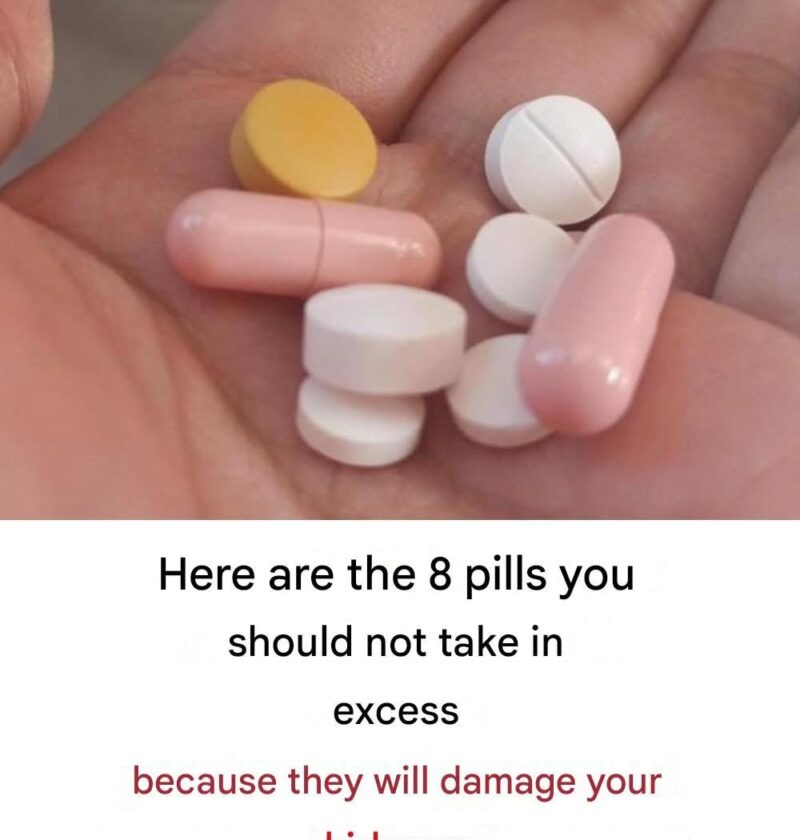
The claim that there are “eight pills you should never take because they damage your kidneys” is a common online warning, but it needs context. Many medications can affect kidney function in certain people or at certain doses, especially those with kidney disease, dehydration, older adults, or people taking multiple medicines.
Examples of medicines that may require caution include:
- Nonsteroidal anti-inflammatory drugs (NSAIDs)
- Examples: ibuprofen, naproxen
- Can reduce blood flow to the kidneys and may cause kidney injury in some situations.
- Certain antibiotics
- Some, especially aminoglycosides, can be hard on the kidneys and require monitoring.
- Some blood pressure medicines
- ACE inhibitors and ARBs can change kidney function and potassium levels, so doctors may monitor blood tests.
- Diuretics (“water pills”)
- Can contribute to dehydration or electrolyte changes if not properly managed.
- Certain antiviral medications
- Some may affect kidney function and need dose adjustments.
- Some chemotherapy medicines
- Certain drugs can be kidney-toxic and require monitoring.
- Lithium (a mood stabilizer)
- Long-term use can affect kidney function in some people.
- High doses of certain supplements or herbal products
- Some unregulated products may contain substances that can harm kidneys.
This does not mean these medicines should be stopped without medical advice. Many are important and safe when prescribed appropriately, with the right dose and monitoring.
If you have a specific list of “eight pills” from a post, share it and I can check which claims are accurate and which are misleading.