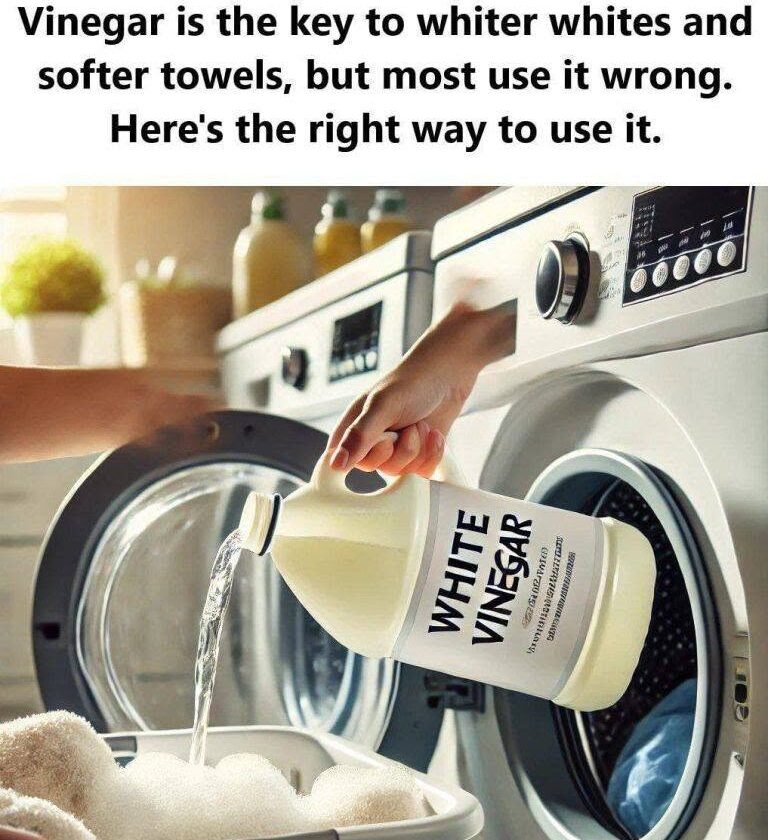
Vinegar is a popular laundry tip because it can help reduce odors, soften fabrics, and remove some mineral buildup, but it is not a magic “whitening” solution. Many online claims exaggerate what it can do.
How to use vinegar correctly in laundry
1. For softer towels
- Add about ½–1 cup of white distilled vinegar to the fabric softener compartment (or during the rinse cycle).
- It can help remove detergent residue that makes towels feel stiff.
- Avoid using it in the same wash as chlorine bleach.
2. For fresher-smelling clothes
- Vinegar can help neutralize some odors, especially those caused by detergent buildup or mildew smells.
- Use white distilled vinegar rather than flavored or colored vinegars.
3. For brighter whites
- Vinegar may help remove dulling residues, but it does not bleach fabrics or reliably turn yellowed whites bright again.
- For true whitening, oxygen-based bleach products are usually more effective and gentler on many fabrics than chlorine bleach.
Common mistakes to avoid
❌ Do not mix vinegar with chlorine bleach — it can create dangerous chlorine gas.
❌ Do not pour vinegar directly onto delicate fabrics without checking care instructions.
❌ Do not expect vinegar to replace detergent — it does not remove all dirt and oils by itself.
Simple towel-refresh routine
- Wash towels with your normal detergent.
- Add ½–1 cup white vinegar in the rinse compartment.
- Dry completely (sun drying can also help freshen fabrics).
Used properly, vinegar can be a helpful laundry aid—but the “secret trick” is mostly about using the right amount and avoiding damaging combinations.