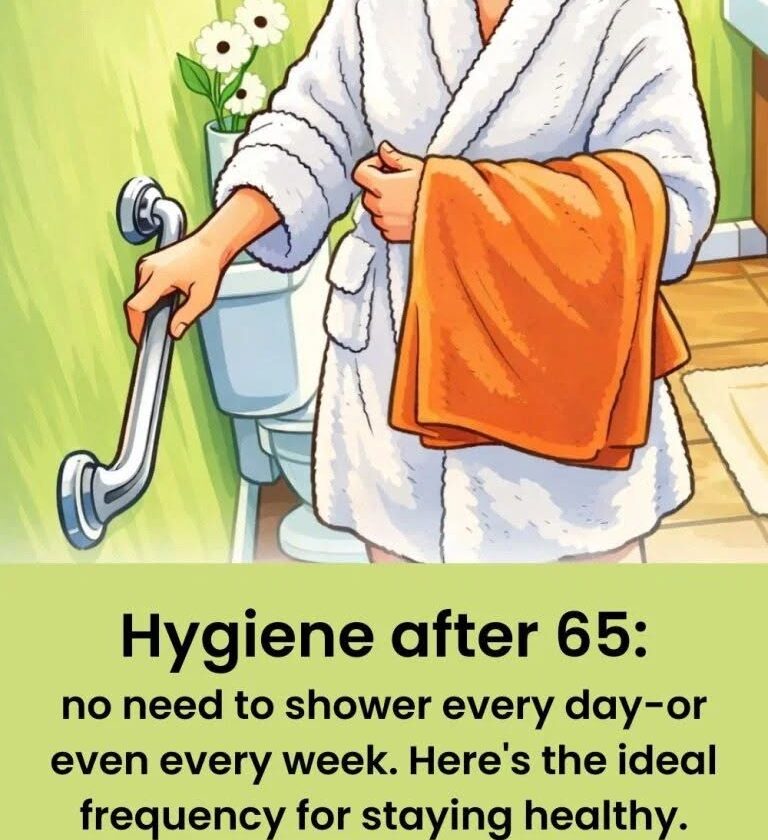
The claim that daily showers after age 65 may do more harm than good is based on how the body changes with aging. It does not mean older adults should stop bathing—it means bathing habits may need to be adjusted to protect the skin and reduce risks.
Why daily showers can sometimes be a problem after 65
1. Aging skin becomes drier
As people age, the skin often produces less natural oil. Frequent washing—especially with hot water—can remove these protective oils and lead to:
- Dryness
- Flaking
- Itching
- Irritation
2. Hot, long showers can weaken the skin barrier
Very hot water and long showers may damage the skin’s protective layer, making it more sensitive.
3. Harsh soaps can cause irritation
Strong fragrances, antibacterial soaps, and heavy cleansing products may worsen dryness. Gentle, fragrance-free cleansers are often better tolerated.
4. Dry, cracked skin can become uncomfortable
When skin becomes very dry, cracks may form, which can increase the chance of irritation and infection.
5. Bathroom safety becomes more important
Falls are a major concern for older adults. Wet floors, slippery tubs, and difficulty stepping in and out of showers can increase injury risk.
A skin-friendly bathing routine
Many older adults benefit from:
- Showering every other day or a few times per week if appropriate
- Using warm water instead of very hot water
- Keeping showers short
- Cleaning areas that need it most (underarms, groin, feet)
- Applying moisturizer after bathing
- Using a shower chair, grab bars, or non-slip mats if balance is a concern
When daily showers may still be appropriate
Daily bathing can make sense for people who:
- Sweat heavily
- Exercise frequently
- Work in dirty environments
- Have certain medical or hygiene needs
The best routine depends on a person’s skin condition, activity level, health, and comfort—age alone does not determine how often someone should shower.